Coffee Lots: Does a “Micro-lot” Taste better?
When coffee people are talking about “Lots of Coffee,” we are not talking about volume, as in “There is a great big pile of coffee in the warehouse.” Instead, when we use the term “Coffee Lot” we are referring to a specific separation of coffee that, in fact, could represent a very wide-rage of volume.
Most people are familiar with the large jute sacks full of green coffee they may see at coffee roasting companies all over the country. But each one of those sacks has an origin story, so to speak. And to find out details of that story, you need to look at the lot number which is stenciled on every one of those sacks. The Lot number on the side of a sack of coffee denotes a specific separation. The Lot can be massive, say, 300 or more sacks of coffee and it can represent many coffee farms from one season’s harvest or it can be very small — perhaps a single bag — and represents a picking from one day of the season from a one farm — something that could be called a “micro-lot”.
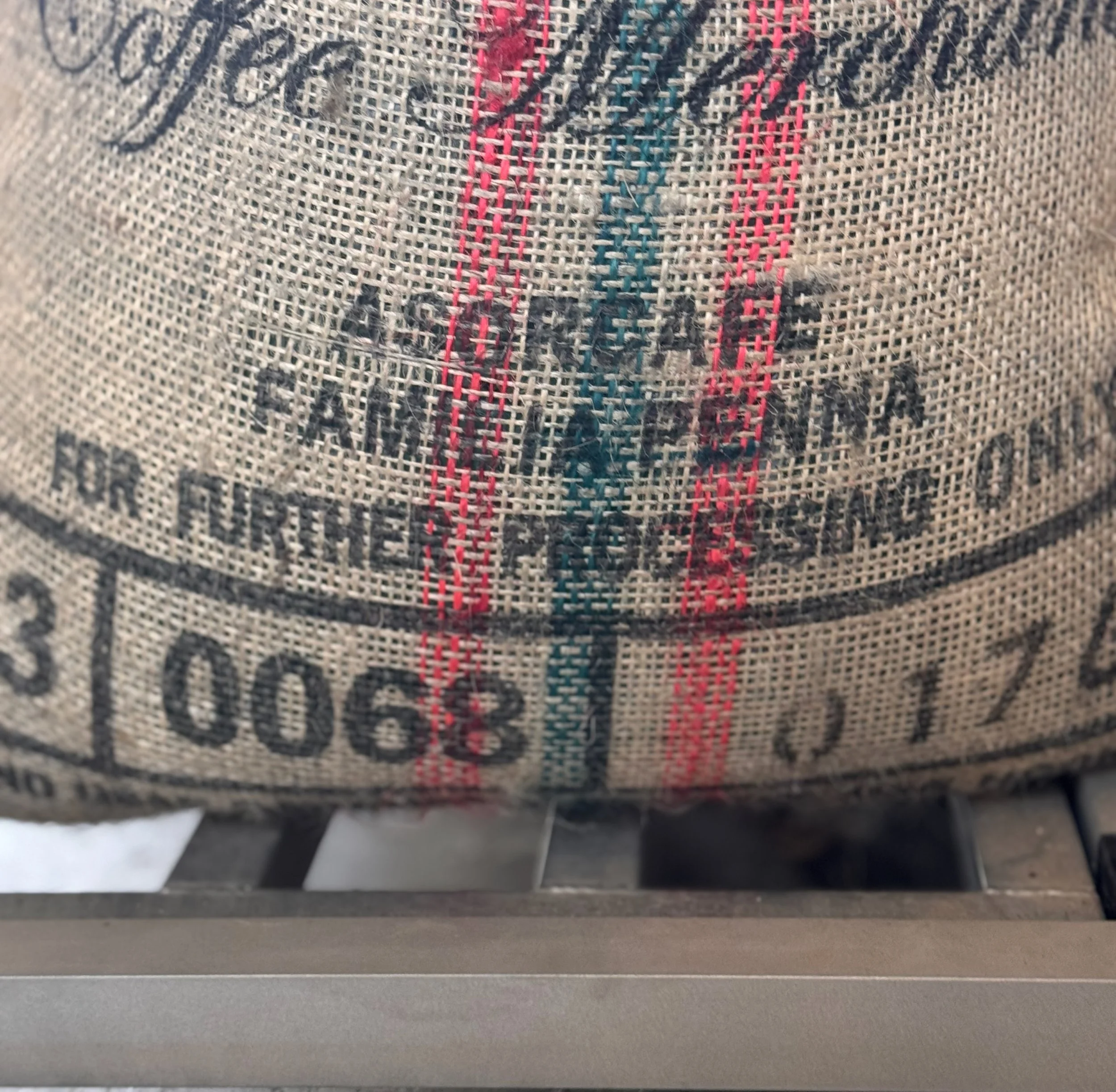
The Lot number on a bag of coffee from Colombia.
The lot number on a bag, has absolutely nothing to do with the quality of coffee in that bag; the number is only letting the buyer, importer, customs inspectors, and exporter know that the coffee in that bag came from a specific place at a specific time.
A Coffee Buyer’s job is to select coffee lots for their roasting company. From the perspective of a coffee buyer for a specialty coffee company, the a Coffee Lot takes on added importance for quality and usage reasons. Coffee lot separation is crucial to buyers in the competitive world of Specialty Coffee, where coffee companies are seeking a quality edge.
The decisions that go into buying specific lots of coffee can be complex and the reasons for buying a specific lot of coffee can differ from company to company.
In order for Coffee Buyers to do their jobs, there must be “lot separation.” Knowing where a coffee came from, how it is processed and what day it was harvested, helps a buyer not only zero on something special but allows them to develop a buying contract for the exact coffee they are interested in.
Once on the ground at origin a buyer needs to make their way through these lots, cupping perhaps 50-100 different lots per day, in order to find THE coffee, or coffees, a roastering company needs. Depending on the farm, country, or time of the harvest season, these lots can be separated in a variety of ways:
LOT SEPARATION
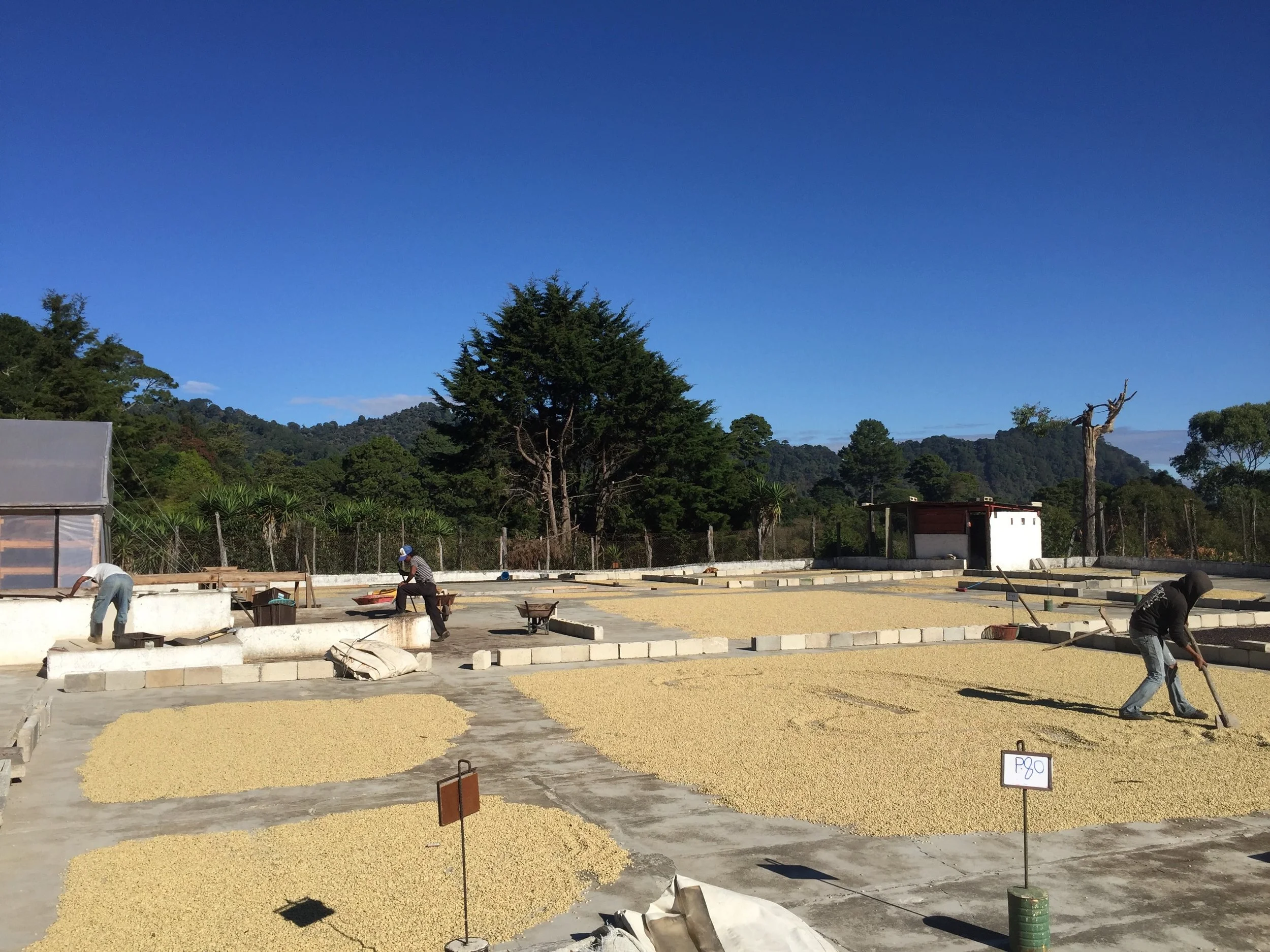
Finca Santa Ana, Guatemala. Lot separation starts at the farm.
Day Lot:
A day lot is a batch of coffee that was harvested on a specific day of the harvest. At a typical coffee farm the harvest may last several weeks. Given the size and elevation of a coffee farm, not all the coffee cherries will ripen on the same day so sections of the farm are harvested on different days in a systematic fashion based on “ripeness” of the cherries. The first day of harvest may be called LOT 1 while the second day LOT 2 and so on.
When I visit a farm during harvest, I want to taste Day Lots - coffee lots that are separated and processed on specific days of the harvest. This is important because all Day Lots are not created equal. Based on the time of the harvest, farm plot, weather conditions during processing, the quality of Day Lots can vary. Having access to all or many of the Day Lots a farm has produced, gives the buyer an opportunity to choose the very best that farm has to offer. Sometimes, the goal of tasting Day Lots is to construct a blend. If Day Lots are relatively small the buyer and grower may work together to blend these day lots (with a specific flavor profile in mind) to produce a much bigger lot of coffee.
Does a separated Day Lot automatically taste better than a lot made up of several day lots processed the same way? The reason for lot separation as it pertains to specialty coffee is indeed to highlight unique flavor characteristics of a particular coffee, time of year and coffee processing method. However, sometimes a blend of lots can be significantly better than it’s parts. I have been in cupping situations where I cupped Day Lots side by side with “Blender” lots and have been more impressed with the blender.
Also, along those lines, just because a lot is called a “micro-lot” doesn’t mean it is good. When the term micro-lot first because a thing, it was often associated with quality or rarity but there is really no agreed upon definition of the term. Is a micro-lot a one bag lot? A ten bag lot? On a big farm, “micro” could mean anywhere from 25-50 bags or more. For a time, farms used this term to sell coffee but things really still come down to the coffee buyer. Is it good enough to buy? Is that micro-lot special on a quality level? And, if it is special, does it really matter how big the lot is if the coffee company is not concerned with the “rarity” marketing aspect of it all? No.
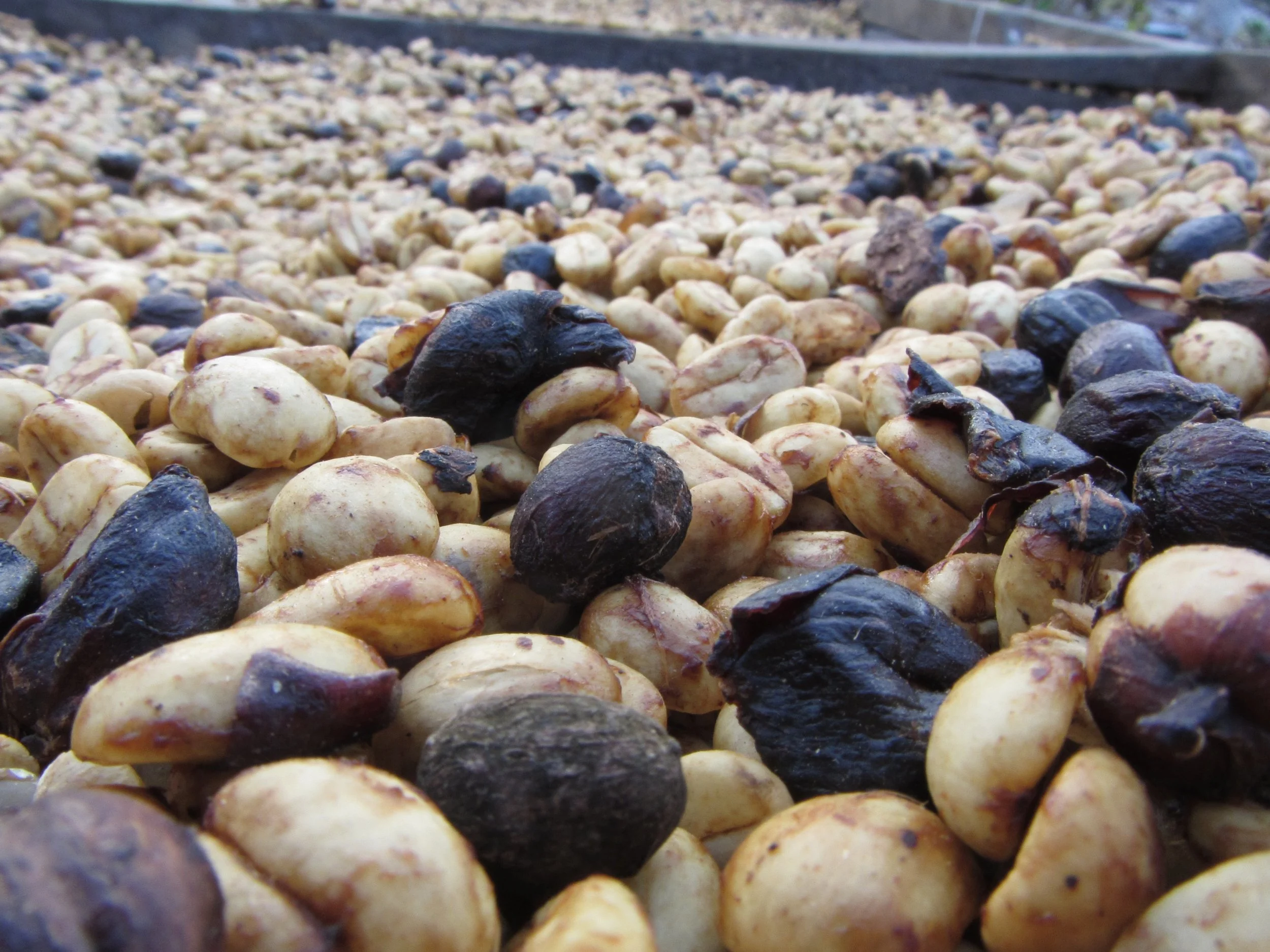
“Honeyed” Processed coffee at JASAL, El Salvador.
Lots Separated Based on Processing Method:
Farms process coffee in different ways. Many farms that cater to specialty coffee roasters will use multiple processing techniques during a single harvest, Washed, Natural, Honeyed, Anaerobic, etc. On farms like this, growers may combine several day lots and process them a certain way, say, Honeyed, which would then become a new “Lot” of Honeyed Coffee. The farm will have a different lot that is for their Natural coffee and/or yet another for their Washed coffee. The different lot numbers will be all be traceable to the farm, but will differ to denote the specific processing style. Our Java Advanced Fermentation from Finca Nogales is an example of the process taking center stage and, thus, this coffee is considered its own “Lot” from a single farm in Colombia.
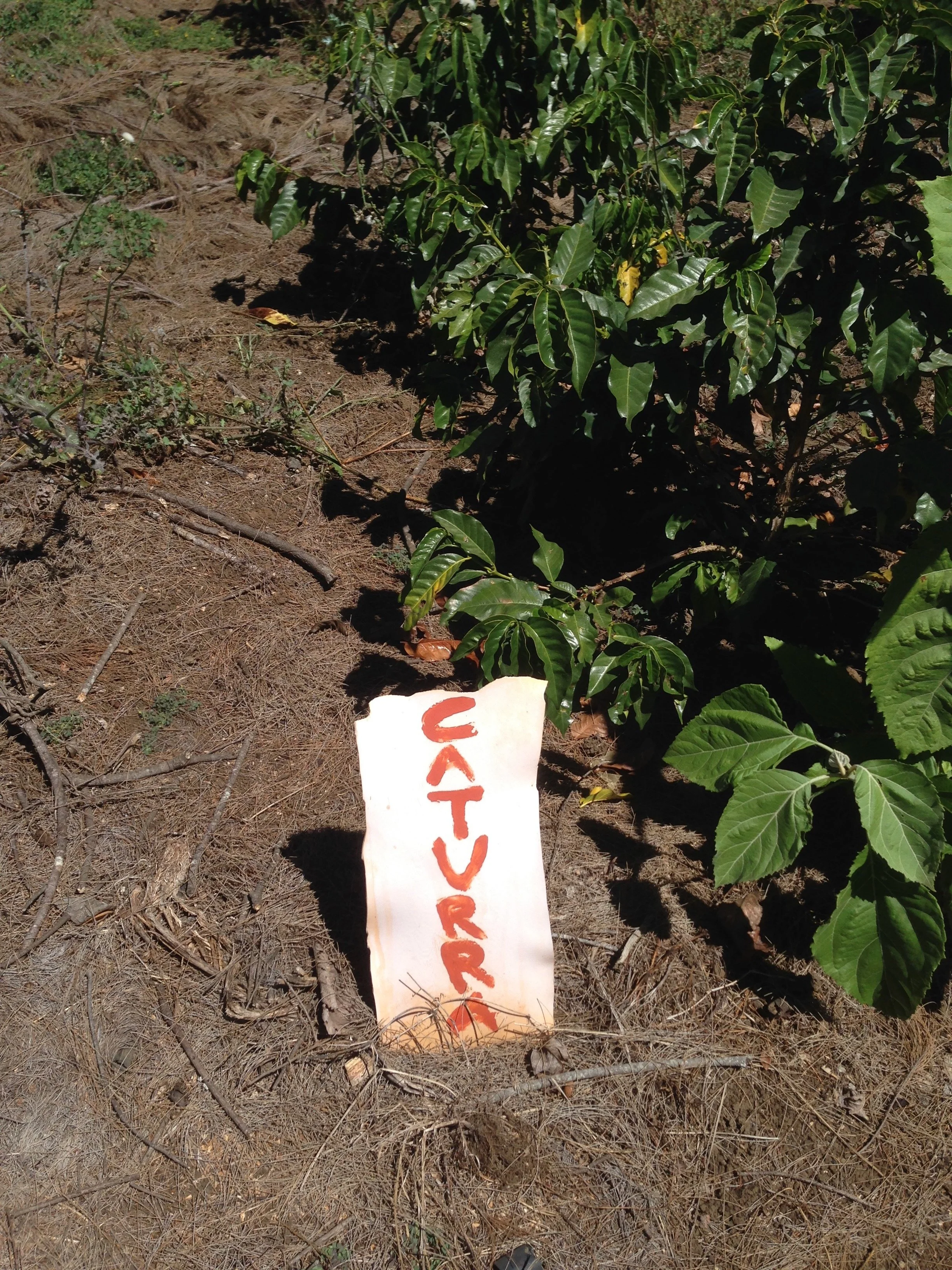
Many farms have organized plots based on coffee varietals.
Coffee Separated Based on Varietal:
Most coffee farms grow several different varietals of coffee. For years farms would just mix all the varietals together to create a blend but with the rise of specialty coffee, many farms will separate varietals based on popularity, quality, or specific tastes of a coffee buyer.
We are currently offering two different varietal lots, a Geisha and a Java. These lots can represent severals days of harvest throughout a season and these lots can be further separated into specific processing styles like a Geisha Natural and a Geisha Washed or as in our case a Java Advanced Fermentation.
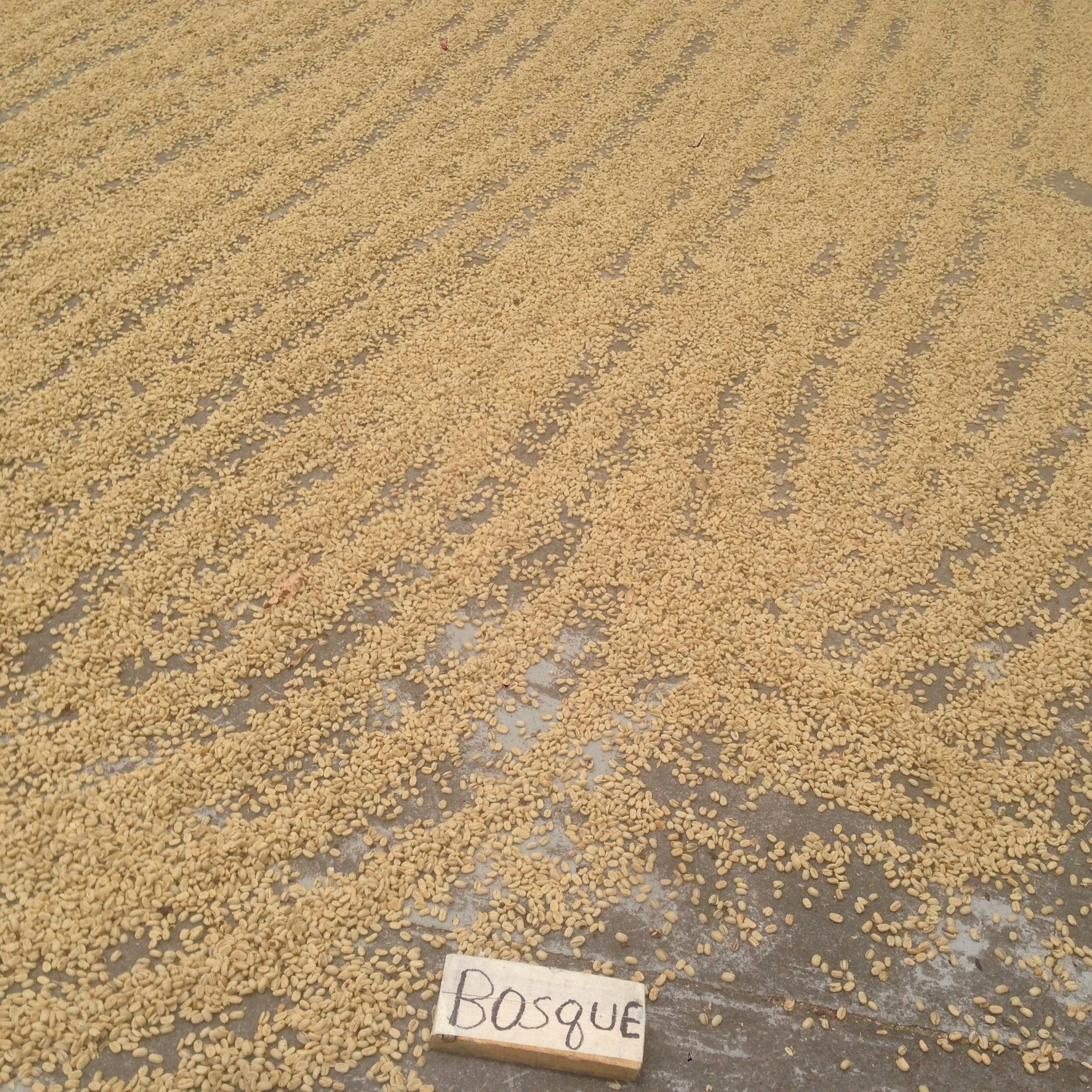
Coffee drying from the Bosque farm at La Esmeralda in Panama.
Coffee Separated Based on Location:
Given different sections of a farm can produce different quality or flavor profiles, growers may separate lots into plots or farms within farms. Some plots might get more sun an/or plots at the farms highest elevation can produce denser, more desirable beans. A grower, then, would want to showcase these beans.
There are day lots within these plots and sometimes an entire harvest from one plot is mixed together. Panama’s Hacienda la Esmeralda sells most of their very best Geisha coffee as plot/farm specific lots. For example, for the last two years we have bought their natural Giesha from the same farm with the Esmeralda Estate, their Jaramillo Farm.
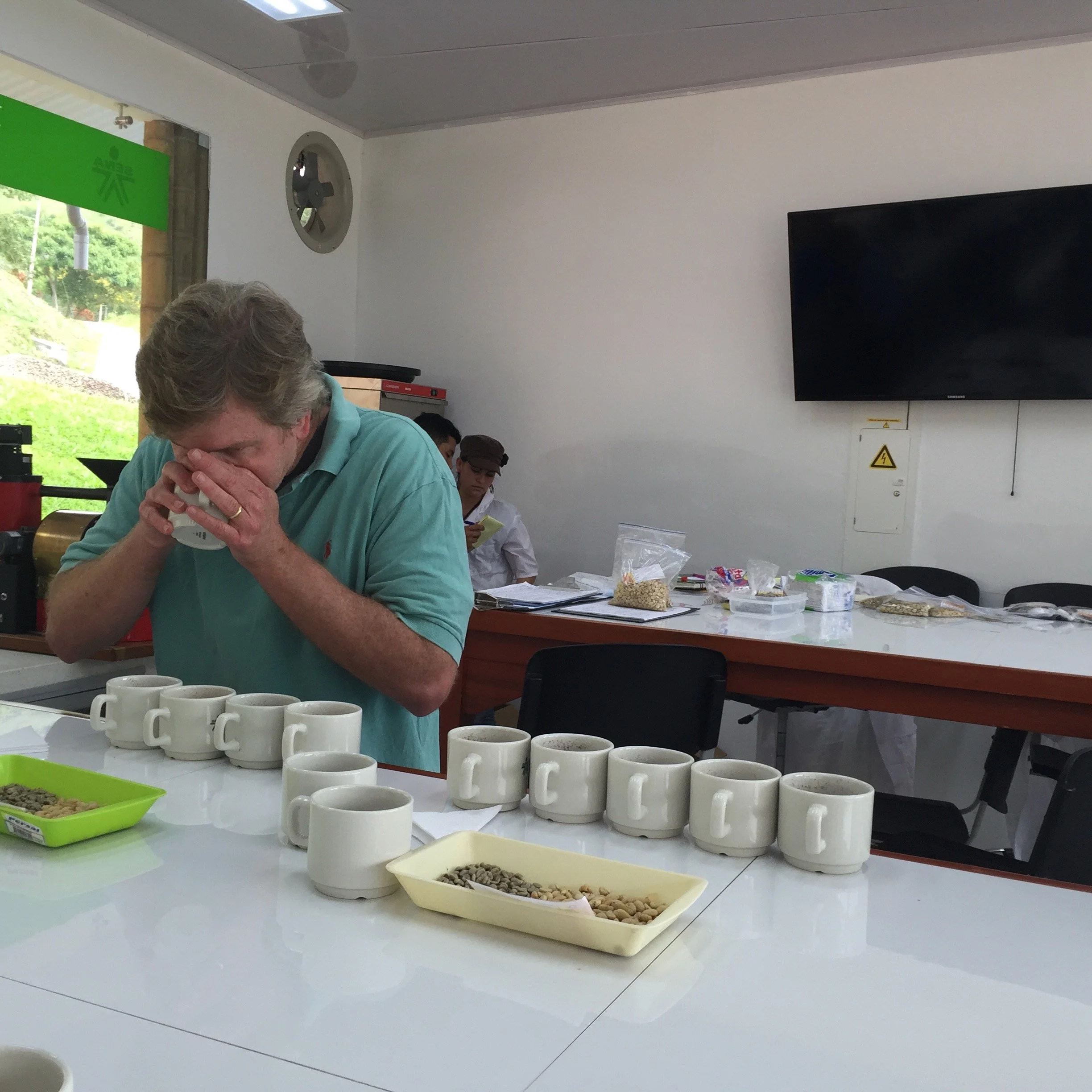
Cupping Coffee and Lot Selection in Pitalito, Colombia.
LOT SELECTION:
All of the above methods of separation are important ways a farm and roasting company can promote not only quality but “unique-ness.” Again, there are a lot of coffee companies competing for the same buyers so a profound need exists in the industry to set a company’s coffee apart.
Yes, many roasters in the world offer coffee from Hacienda La Esmeralda, but not many coffee companies can sell their Naturally Processed Geisha from the Jamarillo farm which was harvested on January 26, 2025. The hope is that the coffee buyer bought that lot because it was better tasting than the other lots but depending on how big the lot was, the coffee company could also claim the lot to be “exclusive” making it more desirable for the coffee connoisseur — rarity and exclusivity can help sell a coffee.
Once a coffee buyer wades through all these lots, which lots they choose to buy is yet another chapter in the process. Outside of the gems a roastery is always looking to feature, what else does the roastery need? Does the roastery need components for an espresso blend? If so, the coffee buyer would be looking for ingredients. Perhaps a roastery needs something chocolaty and big-bodied for the base of the espresso and may then also need different lots that are fruitier and floral to use at a smaller percentage for balance.
There is always a cost and use factor hanging over every decision a coffee buyer makes. If they are buying, say, a 50 bag lot of coffee for a smaller/medium sized roasting company, can the roastery find multiple purposes for that one lot? In Bird Rock Coffee’s early days, if we were buying a bigger blender lot, the hope would be to use the coffee not only as an espresso component but also as a “house blend” for a wholesale account and/or maybe in a seasonal blend as well.
Another crucial question for a coffee buyer when it comes to lot selection is, “Can the coffee be used at different roast degrees?” Some coffee origins offer more flexibility when it comes to roast profiles; a dense thick coffee from Huehuetenago,Guatemala will be more flexible in a real-world roastery than a delicate washed coffee from Yirgacheffe, Ethiopia. A coffee roaster doesn’t want coffee sitting around for a long time, especially if most of that coffee needs to be stored at the importers warehouse — which would trigger “carry fees.” Whatever is bought at origin needs to be used in a timely manner so having multiple outlets for a big coffee lot is always a good thing.
Check out the coffee lots we curate and roast to order here!