
Panama 2026
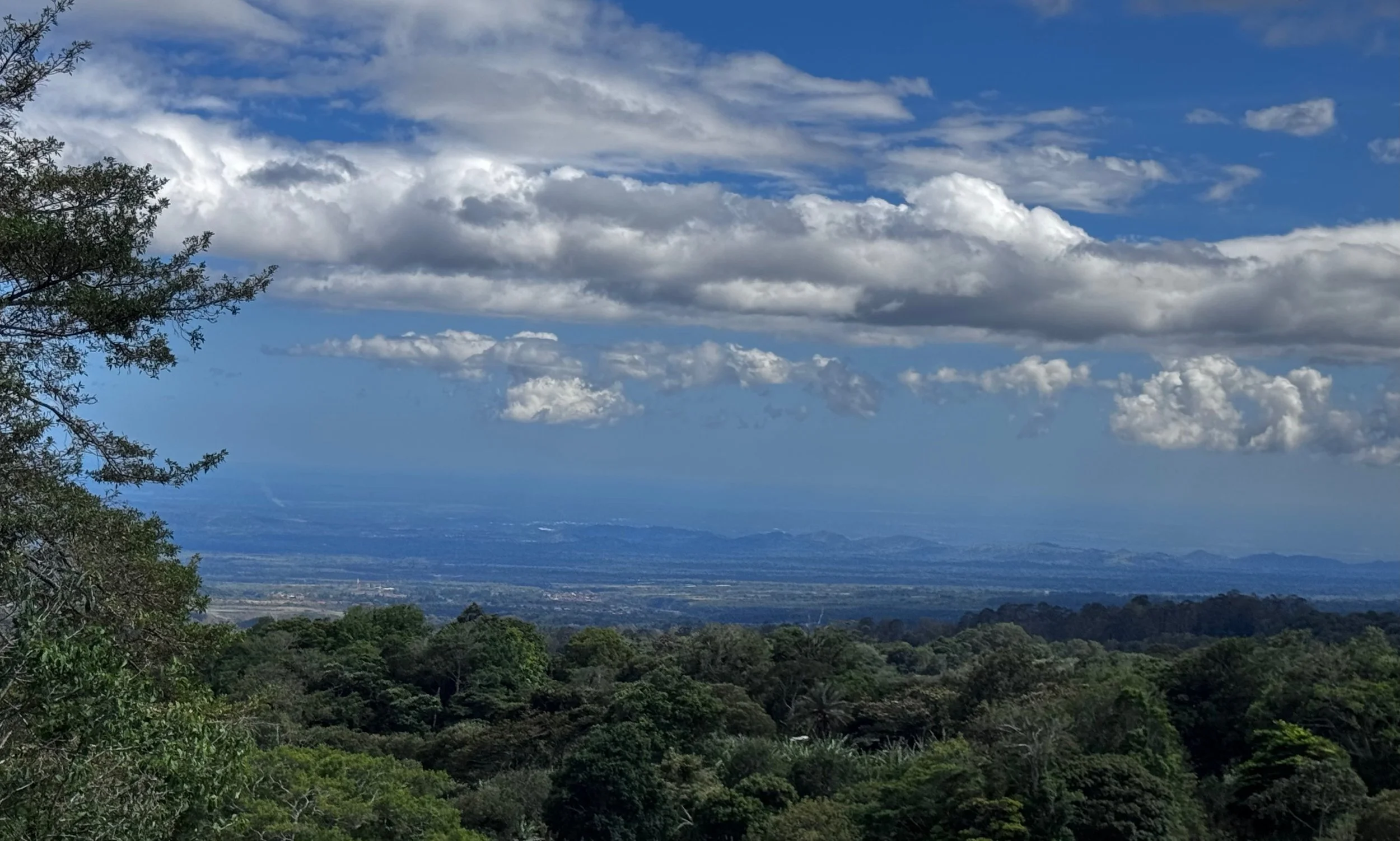
It had been awhile. Nine years actually.
When my wife Elke and I sold Bird Rock Coffee, I stayed on for a bit in the position of Coffee Buyer in order to connect the new owners with farms they had not worked with before and to help make a seamless transition on the green-coffee side of things. While the new owners were experienced coffee-people, Bird Rock’s operations, and California in general, were new ventures for them so it was crucial for us all to work together in ensure that quality remained high and that our farming partners felt secure knowing that the new owners placed a premium on great coffee and paying nice price for that coffee.
After about a year in that position, I was ready to transition out of the coffee business and back to teaching (this time at USD); But before I left Bird Rock Coffee for good, I made one final sourcing trip with my soon-to-be Coffee Buyer replacement to one of my all-time favorite origin countries: Panama.
That was way back in 2017.
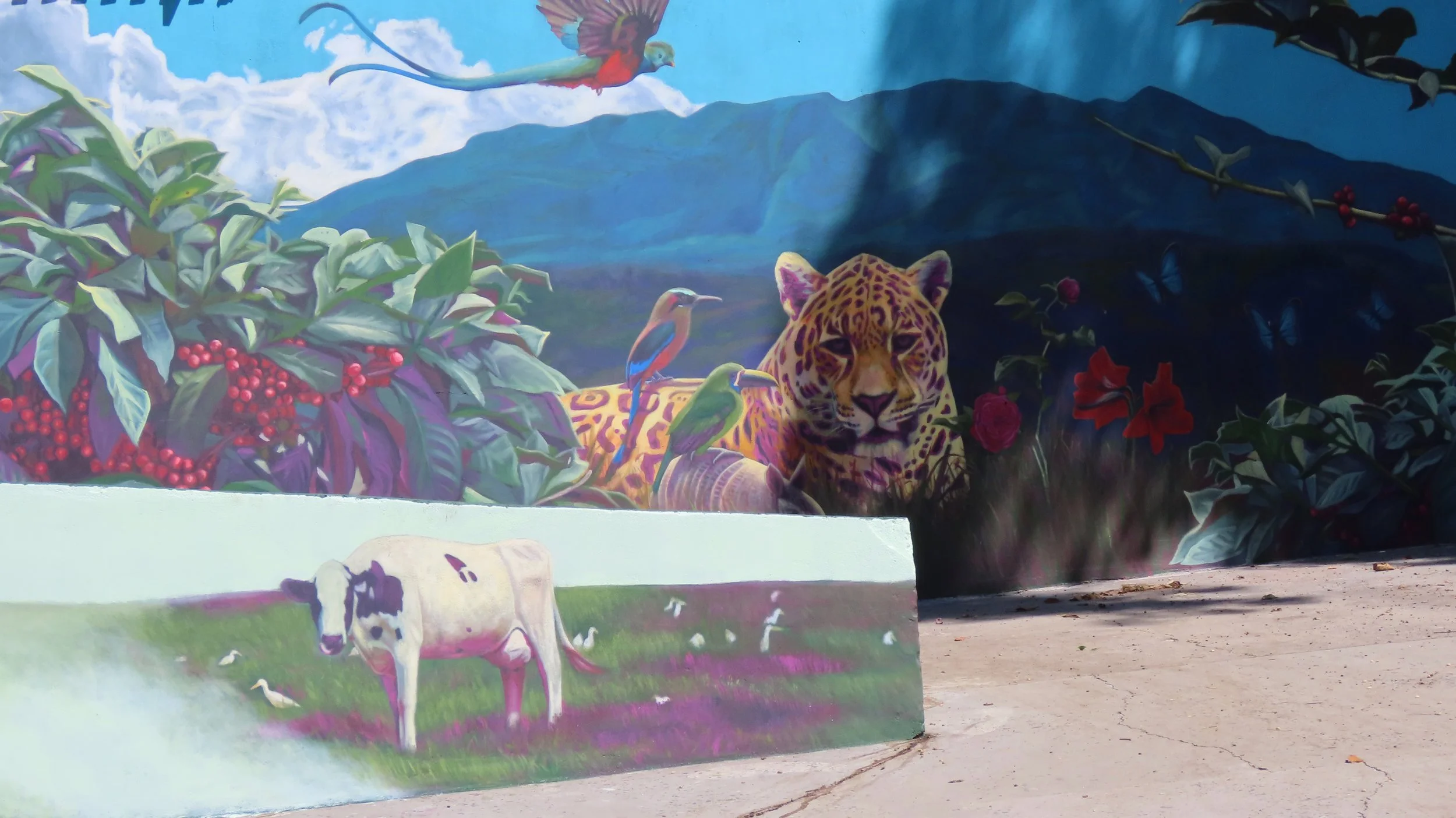
Hacienda La Esmeralda
At the time we sold, I had no idea I would ever return to the coffee business. I was a touch burnt out on it all, the coffee, the equipment, the people, so I was looking forward to returning to teaching, which I did, and then … COVID happened. I left teaching and found myself, like most of us during that era, with a lot of time to think about things.
My thoughts gradually moved back to coffee: What if I could do coffee again without the stress? What if I could just focus on roasting coffee that I liked and now bound by the demands of retail like “French Roast”? What if I could blend my love of teaching and coffee and develop a coffee education program?
Move ahead to 2024 and Chuck’s Roast and Patton Coffee Consulting came to exist. It has been an interesting time so far. Some things about getting back into the coffee biz I expected but a few things have surprised me — co-ferments which really didn’t exist is 2017 are a thing, and today more green coffee companies operate that cater to ultra-micro-roasters, which Chuck’s Roast clearly is.
Back in the day, Sweet Marias was the only solid option where one could buy just 20 pounds or so of green coffee. Now, several coffee companies operate in the USA and other countries that do outstanding sourcing on the ground while offering small roasting companies tiny amounts of green coffee. Because of this, the need for a small coffee roasting company to travel to origin in order to source unique, rare, and transparent coffees, is not as crucial today as it was 10 years ago.
However, I have learned there are limits. While I have/am offering amazing coffee from a few boutique green coffee brokers, these companies are offering the same coffee, or coffee from the same farms to many small roasters out there.
To the average roasted coffee buyer, at a glance it could seem like a bunch of coffee roasters are all offering the same coffees from Sebastain Ramirez or Wilton Benitez, for example — when in reality each roaster could be offering a different lot of their coffee.
Certainly if a coffee is great, it is traceable, and the lot size is very limited, I will continue to buy it and offer it here but I do recognize there is still a need to source at origin if you want to coffee company to stand out from the pack and if you want to offer customers truly unique coffee experience. That part of the business has not changed over the last 10 years.
That said, Chuck’s Roast would not currently support the type of sourcing I did in the Bird Rock Coffee days when some years I would put in well-over two-months of travel time in countries all over the world. Those trips would “pencil” because I was usually buying twenty to a hundred 60KG bags of coffee on each trip. The sourcing trips were often worth it because I could find special coffee long before it shipped to the US and sold as SPOT to whomever, and the actual cost of the travel would be deferred over the many bags and thousands of pounds of coffee purchased on that trip over time.
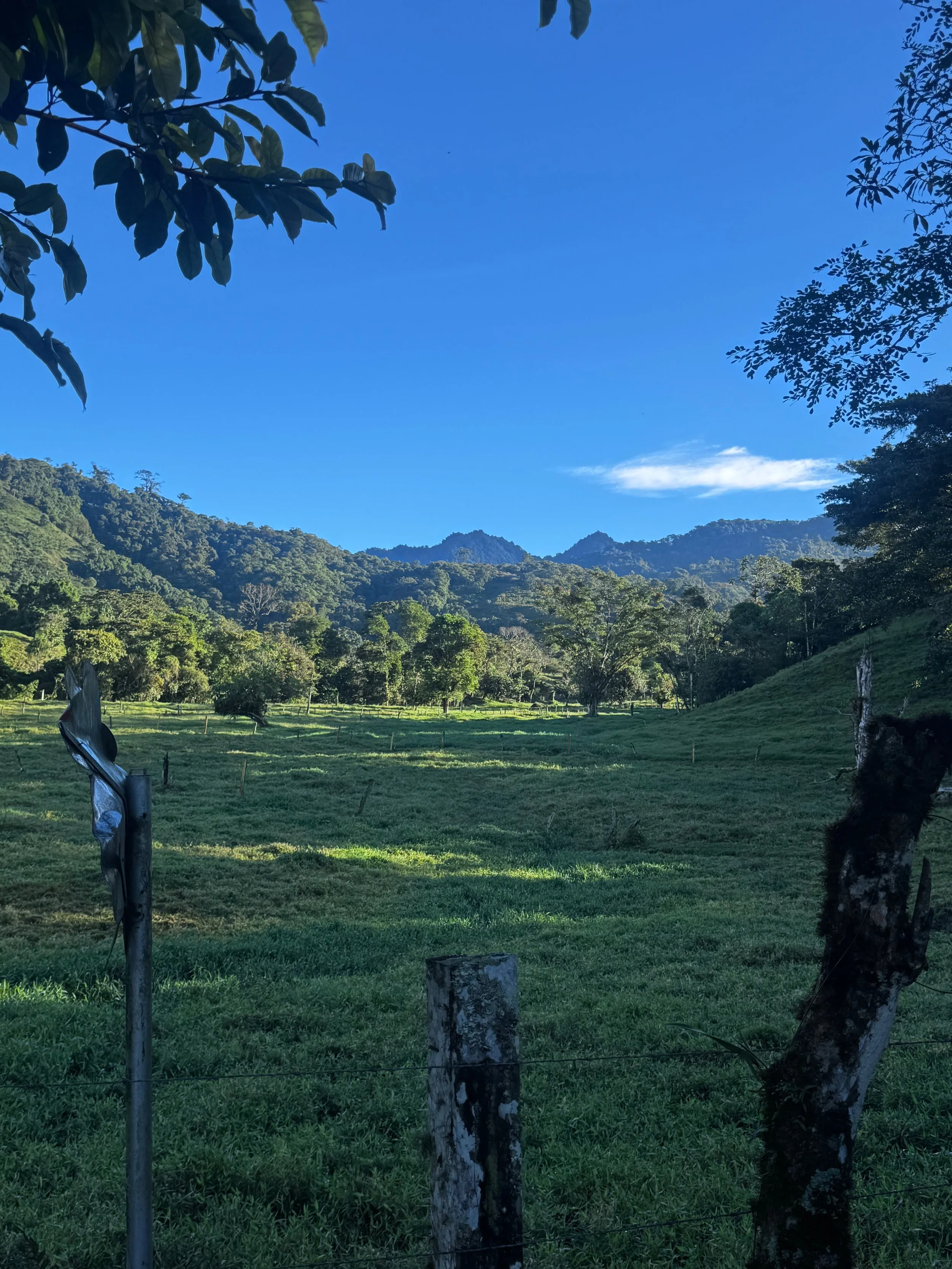
The road to Mil Cumbres, Volcan, Panama
But with a low-volume company, it is difficult justifying a sourcing trip to origin. In addition to the travel cost, there is a very narrow margin of error for a small roasting company on these trips. There were times with Bird Rock I would spend time and money sourcing in a country only to find very little coffee to buy. That scenario simply cannot happen with a tiny company so there a few places in the world where a sourcing trip would actually make financial sense for Chuck’s Roast. But Panama makes sense.
For starters, Copa Airlines now flies direct to Panama City from San Diego so the overall travel time is manageable but most importantly (next to Ethiopia or Kenya) one can find the most complex, dynamic, and transparent coffees in the world in Panama. As an added bonus, almost every grower in Boquete, the famed Geisha region in Panama, speaks English—which makes things easier for someone who got mostly “D”s in high school Spanish classes. Putting all this together makes Panama a very good destination for a tiny coffee company.
Additionally, 2026 is down-year for the coffee harvest in Panama; most farms in Boquete were reporting a significantly low harvest this year. Usually what this means is that green coffee samples would be hard to come by here in the U.S. because there simply would not enough sample material for farms to ship out making a sourcing trip all the more important.
My goals for this trip were simple: I needed to source some exceptional coffee first and foremost. Certainly, I was looking forward to cupping at Hacienda Esmeralda again but I also wanted to branch out and cup with some new producers that either I had not bought from in the past or who where not yet in operation ten years ago.
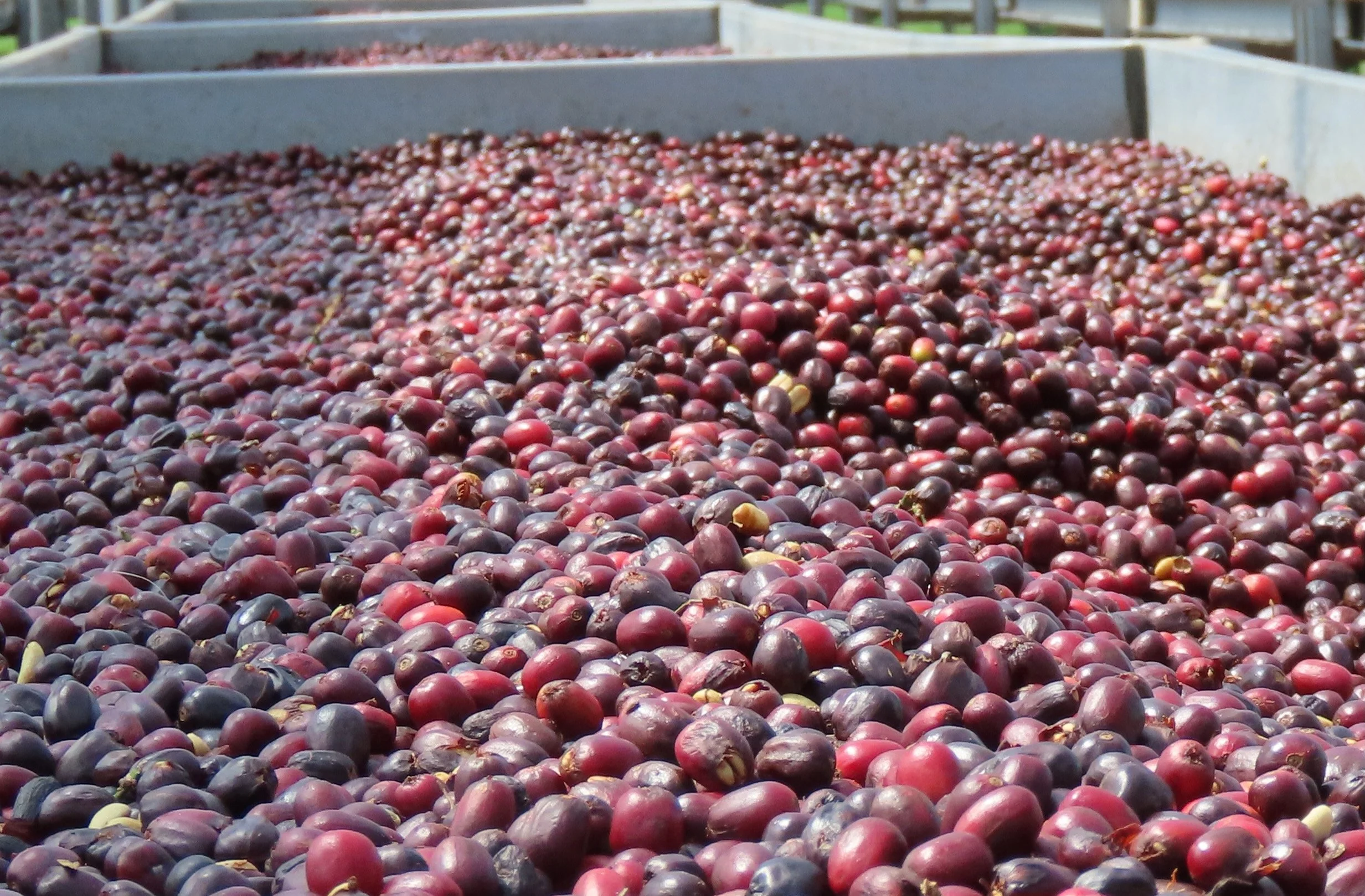
Coffee cherries at Hacienda La Esmeralda
Hacienda Esmeralda
The Peterson Family
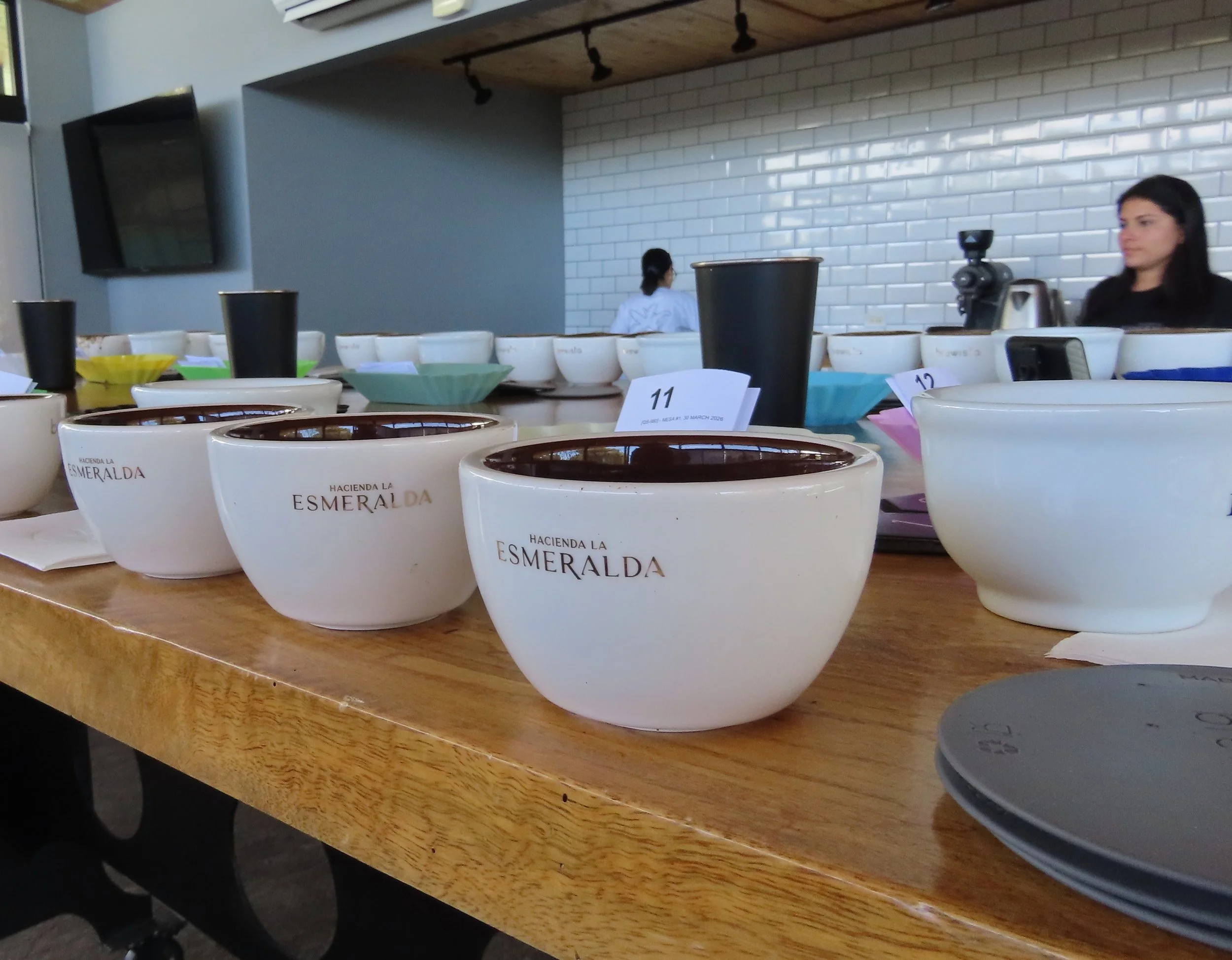
I took the 9:30 p.m. red-eye from San Diego to Panama City and after a quick flight from Panama City I landed in David early the next morning. As luck would have it, Rachel Peterson had just dropped her daughter, Alexandria, off at the airport so she was kind enough to wait from my arrival and then shuttle me to Hacienda Esmeralda in Boquete which is about 45 minutes from David.
I was cupping incredible Geisha by 10:00 a.m. that morning!
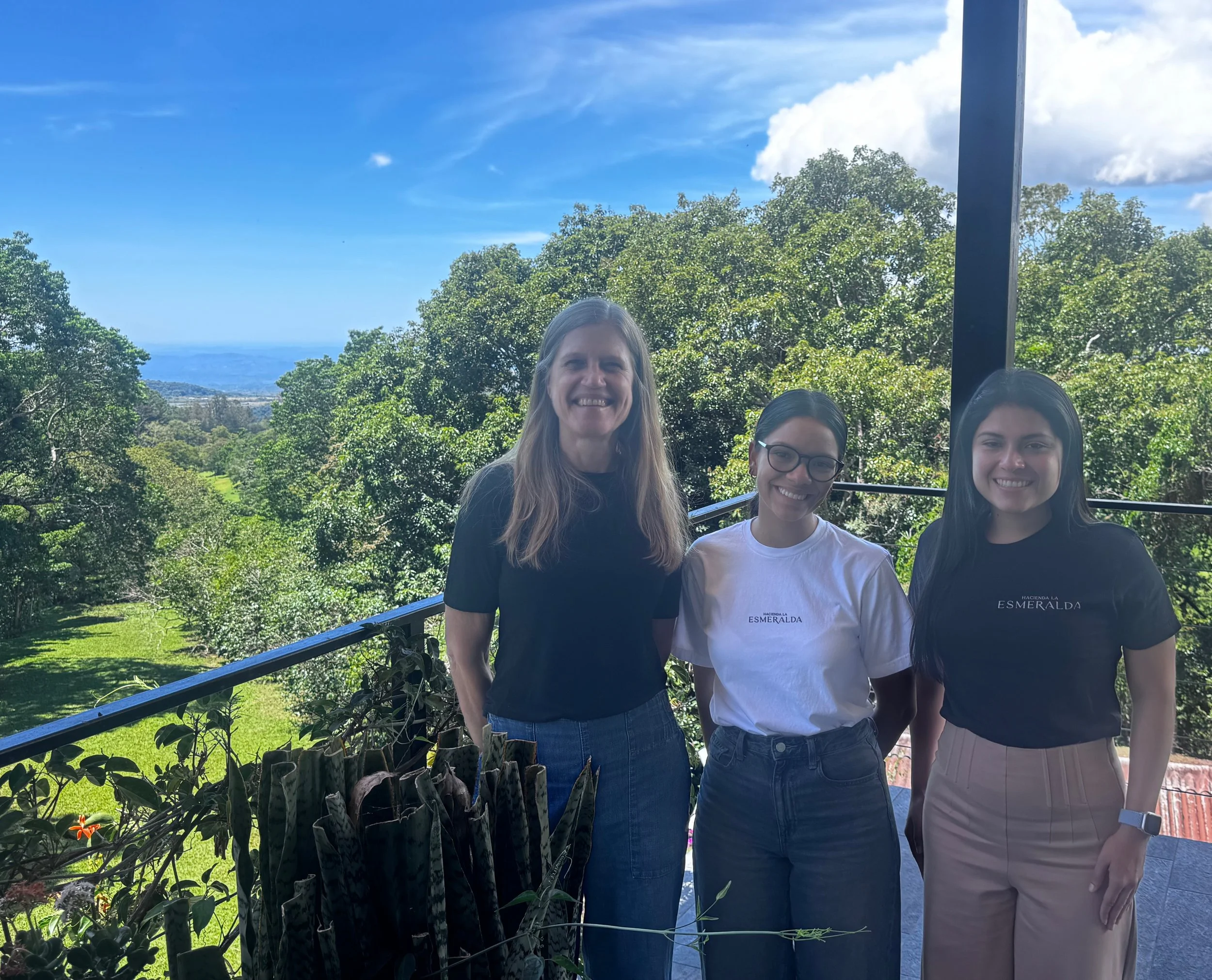
Team Esmeralda
As usual, Esmeralda’s coffee was phenomenal, but the surprise was to see how much that Esmeralda had evolved since my last visit. In addition to a new, state-of-the-art cupping room, the Peterson family had embraced many new processing techniques at the farm. They had a room for air tight tanks to use for anaerobic fermentation plus a small dark-room that is temperature controlled for slow, and controlled drying. While I was was I there I was able to see their almost completed massive dark cold-room, many times the size of their current one, which will be solar powered and should be completed long before the next harvest.
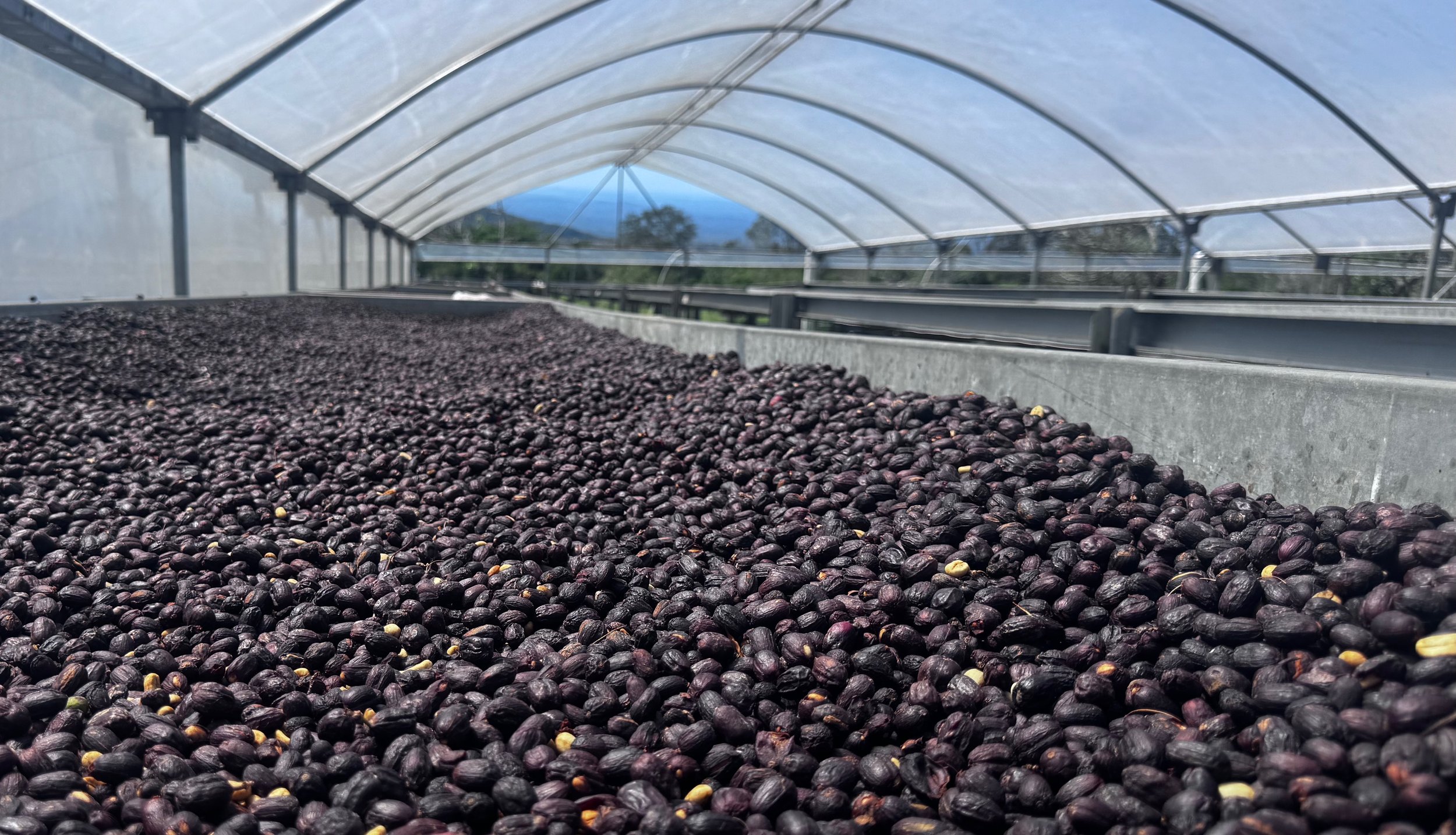
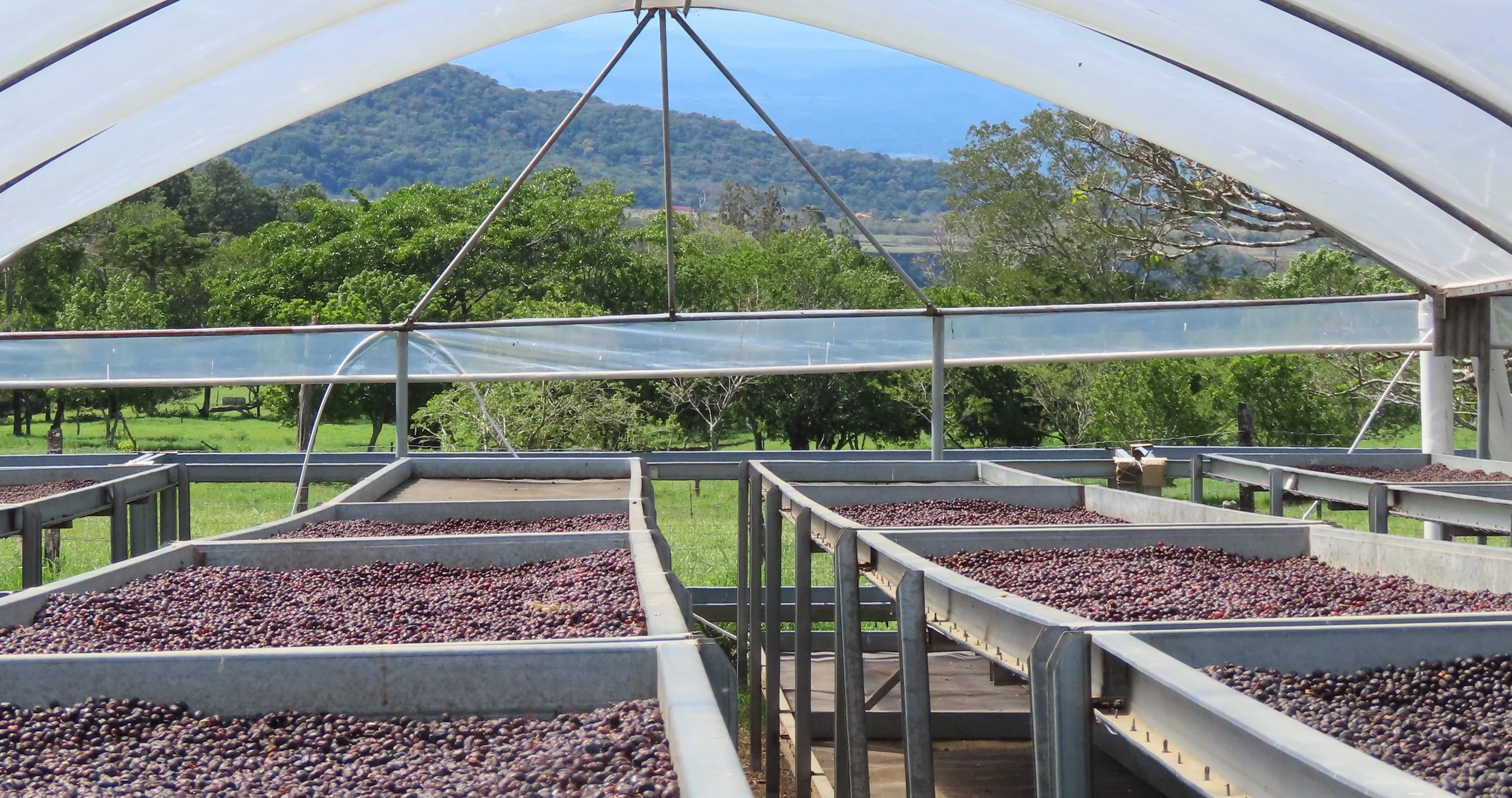
We secured not one, but two lots from Hacienda Esmeralda this year. As is tradition for us dating back to my first Esmeralda lot in 2007, we will feature this remarkable farm and coffee during the holidays so you will all have to wait until November 2026 to try it.
Trust me though, it will be well-worth the wait.
HiU, Finca Los Lajones
Graciano Cruz
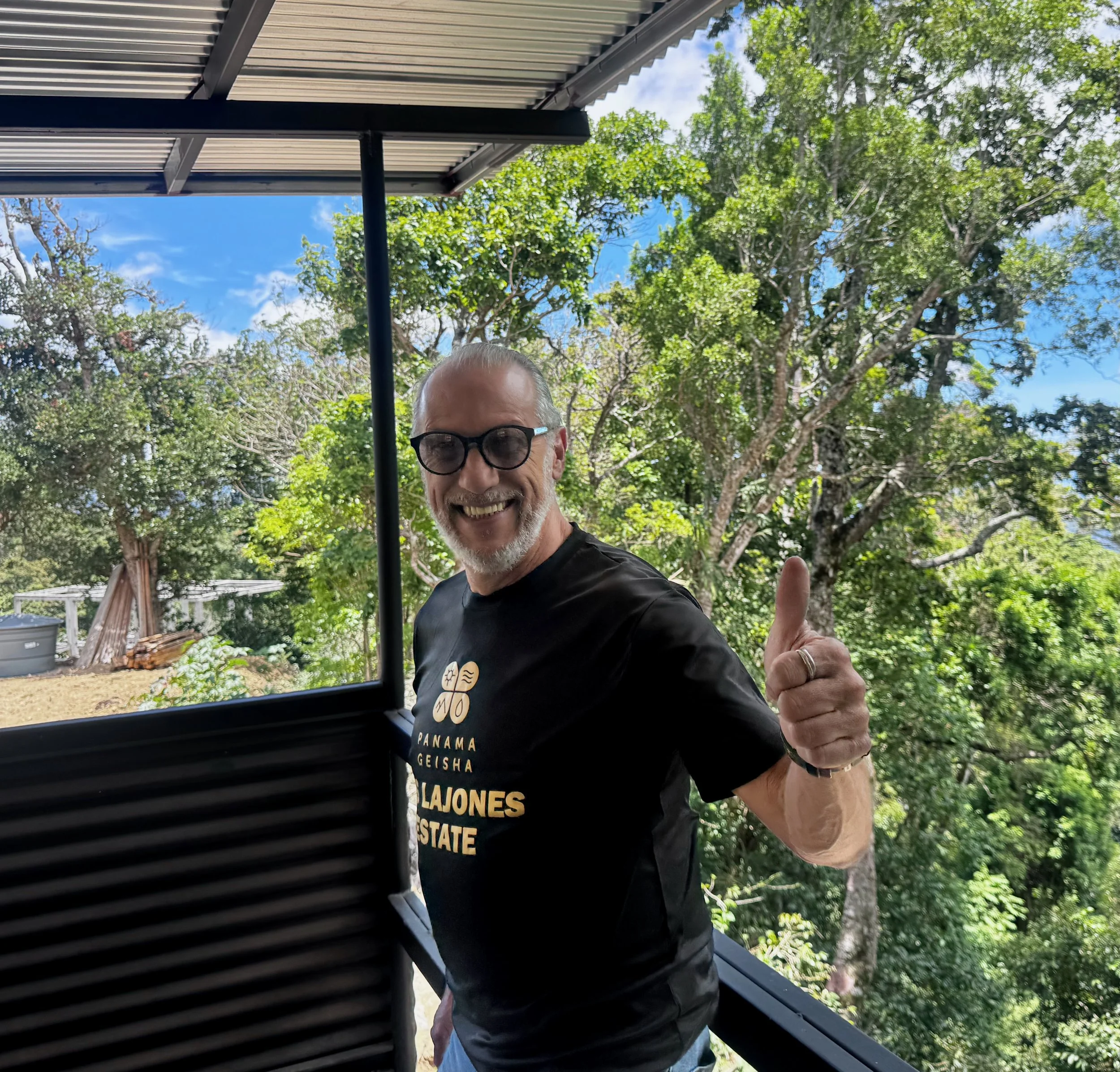
Graciano Cruz
At the conclusion of the Esmeralda cupping, Graciano Cruz picked me up and took me to his new coffee lab, located within a natural reserve high above the town of Boquete and surrounded by Howler Monkeys — no, I was not bitten.
I have known Graciano for a number of years and cupped with him in many interesting places like Ethiopia, Uganda, and El Salvador, where he has had/has on-going coffee projects; it is always a pleasure to see him.
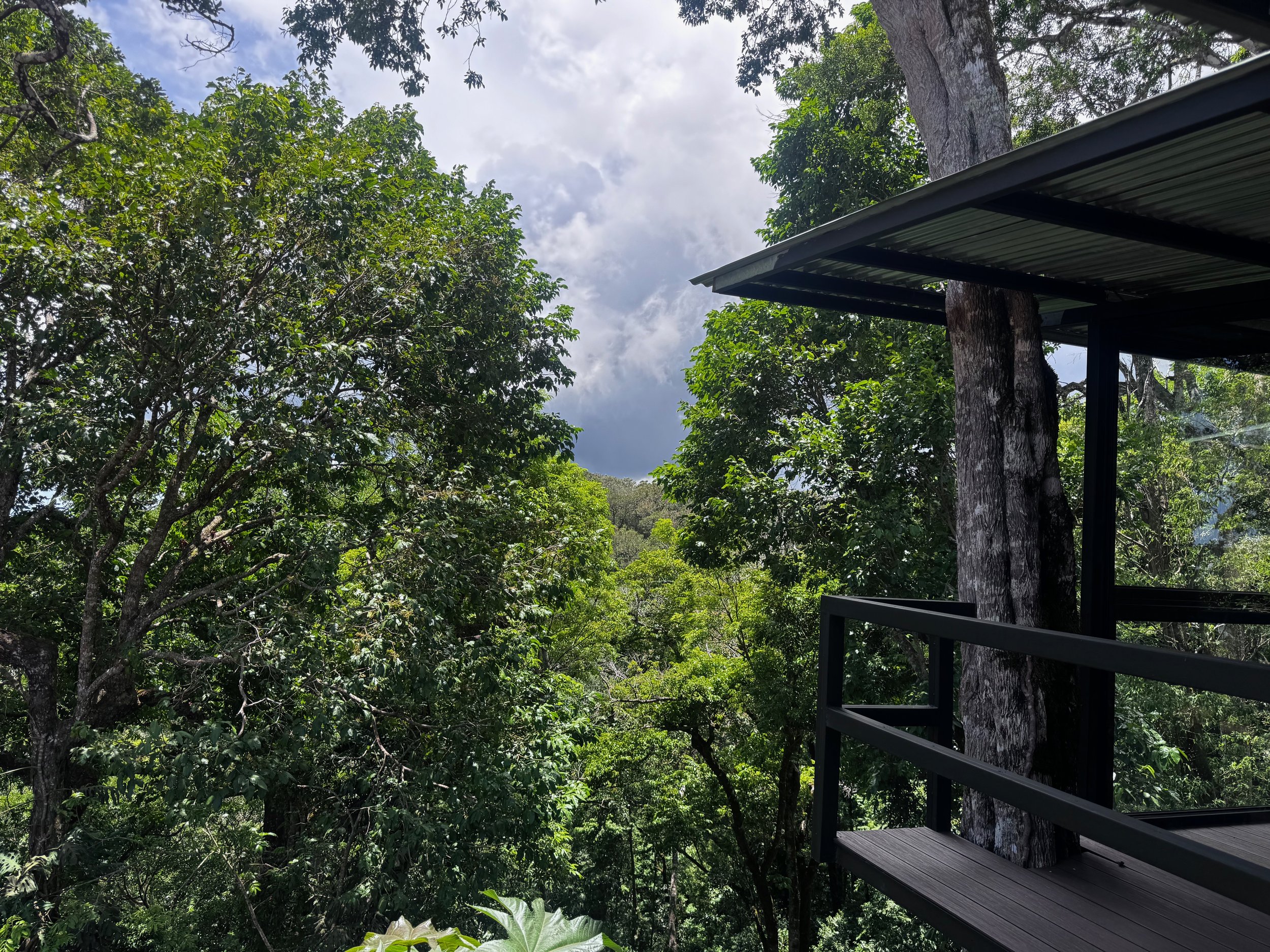
Graciano’s Cupping Lab
Graciano has two farms in Panama that range in elevation from 1600-2100 meters. We cupped coffee from both farms and unlike the cupping at Esmeralda, we cupped a few other varietals in addition to some Geisha lots. Graciano is one of the early adaptors of the dry-processed method for specialty coffee outside of Ethiopia. In fact, long ago he worked in Ethiopia helping growers there perfect and improve their methodology for naturals so pretty much everything we cupped was a natural. One of the lots we bought was a natural Yellow Cataui. This is a fun, super sweet lot that we hope to offer this Spring/late Spring should timing work out.
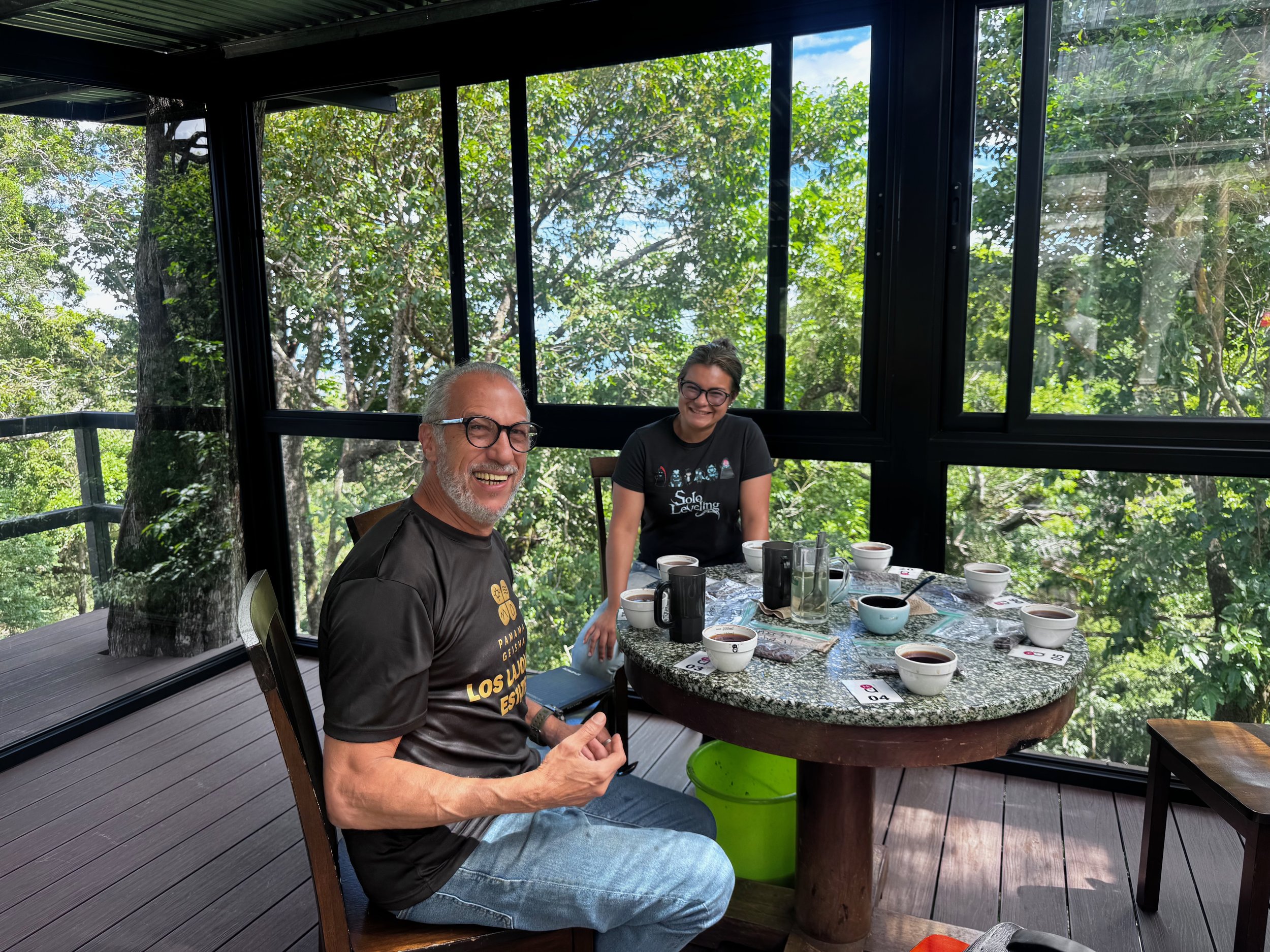
Mil Cumbres
Mario Fonseca
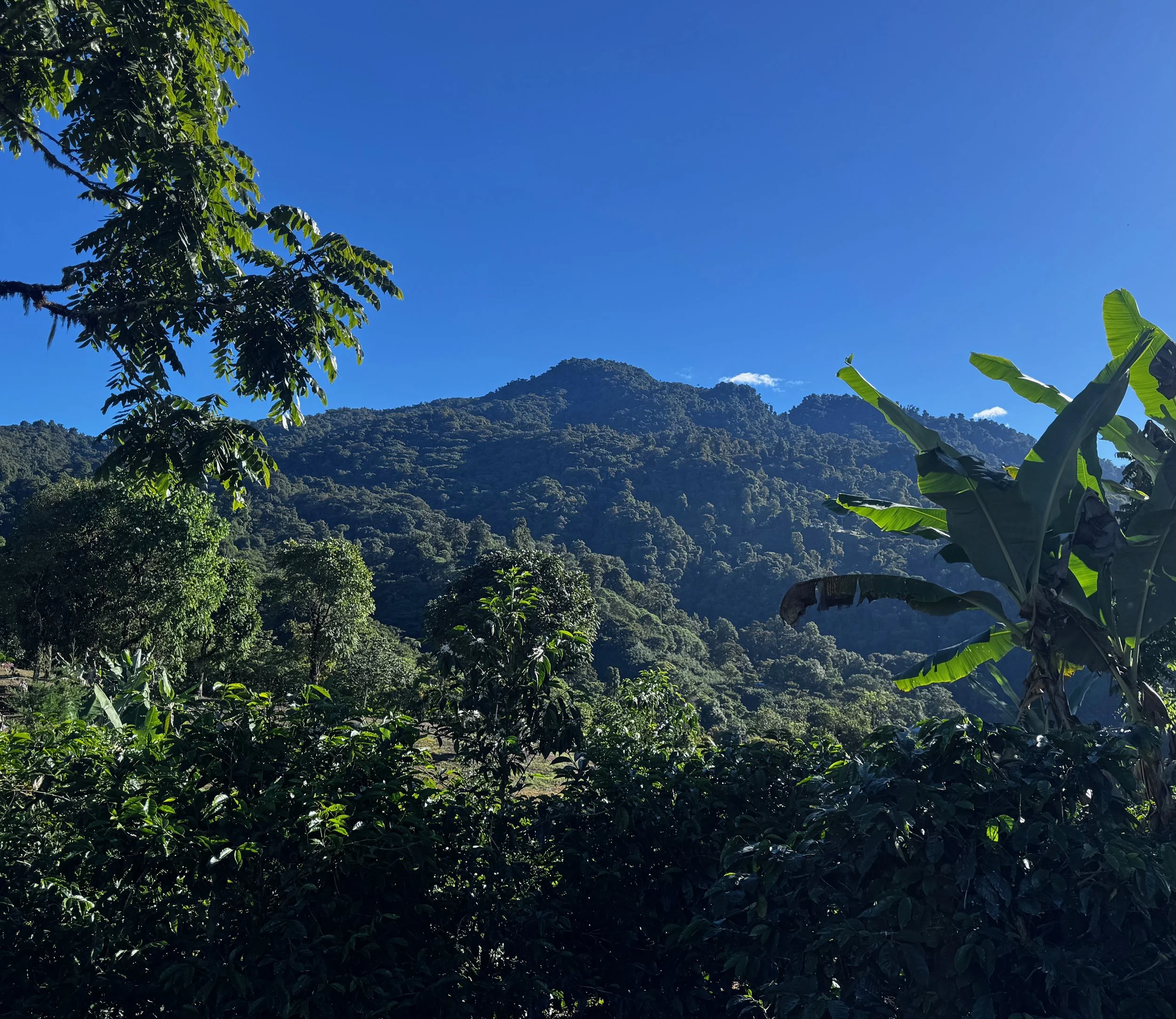
Mil Cumbres
Bright and early the next morning, at 6:00am, a driver picked me up at my hotel in Boquete and we began the drive to Mil Cumbres in Volcan. In all the years going to Boquete, I never sourced coffee in Volcan so this was a real treat. The first thing I noticed as we approached the back side of the Baru Volcano and approached Paraiso was that the jungle was incredibly lush and dense, unlike the dryer Boquete. Mil Cumbres is located in the Volcan Baru National park and is the closest farm in Volcan/Boquete to the Pacific Ocean which makes for a unique coffee-growing micro-climate.
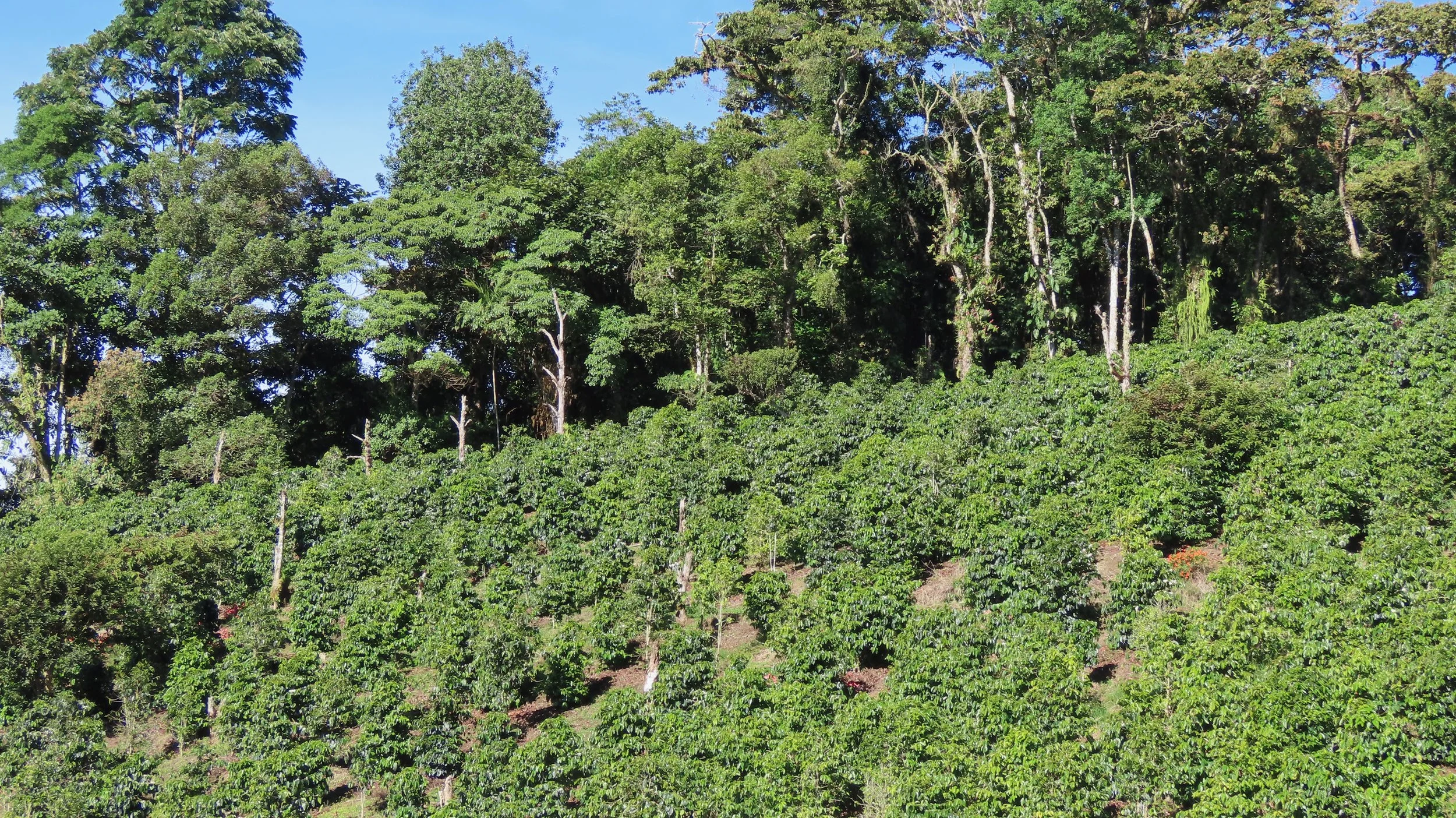
Mil Cumbres
Mario grows a lot of Geisha in addition to several other varietals on his farm that sits at 1700 meters and climbs to almost 2200 meters. He prefers to slow-dry his naturals in temperature controlled dark rooms and has exacting standards for harvesting and processing his coffee. We cupped about 25 coffees in his amazing cupping room with a view; all the coffees were outstanding.
I settled on an ultra tiny lot of sublime natural Geisha and a truly remarkable Pacamara coffee that will surprise you in its clarity, sweetness, and complexity. At this writing, our lots are being milled, cleaned, and prepared for shipping.
Tentatively, you can expect to see one of these lots on our offering sheet late this Summer — I might just keep the other one to myself :).
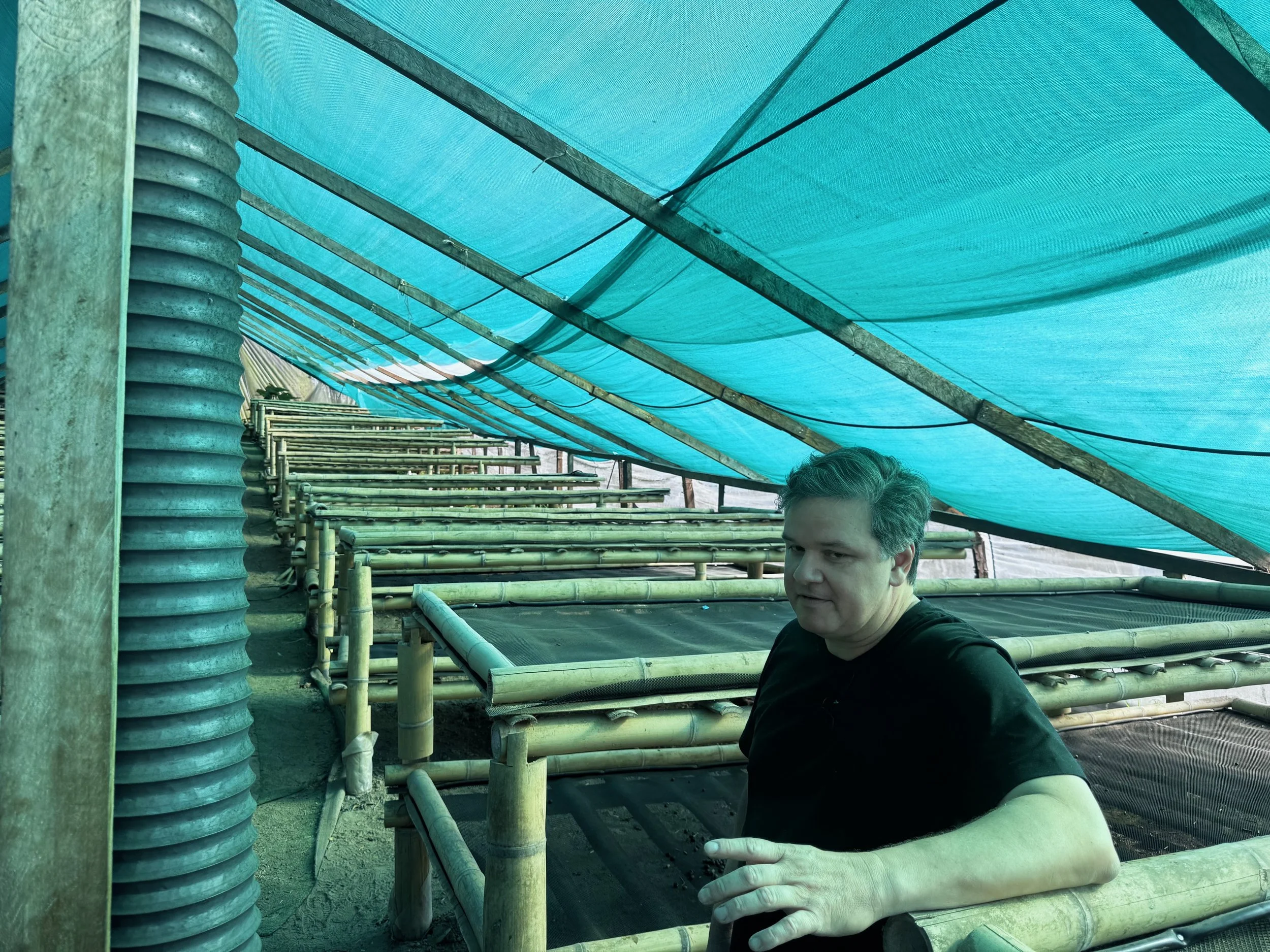
Mario
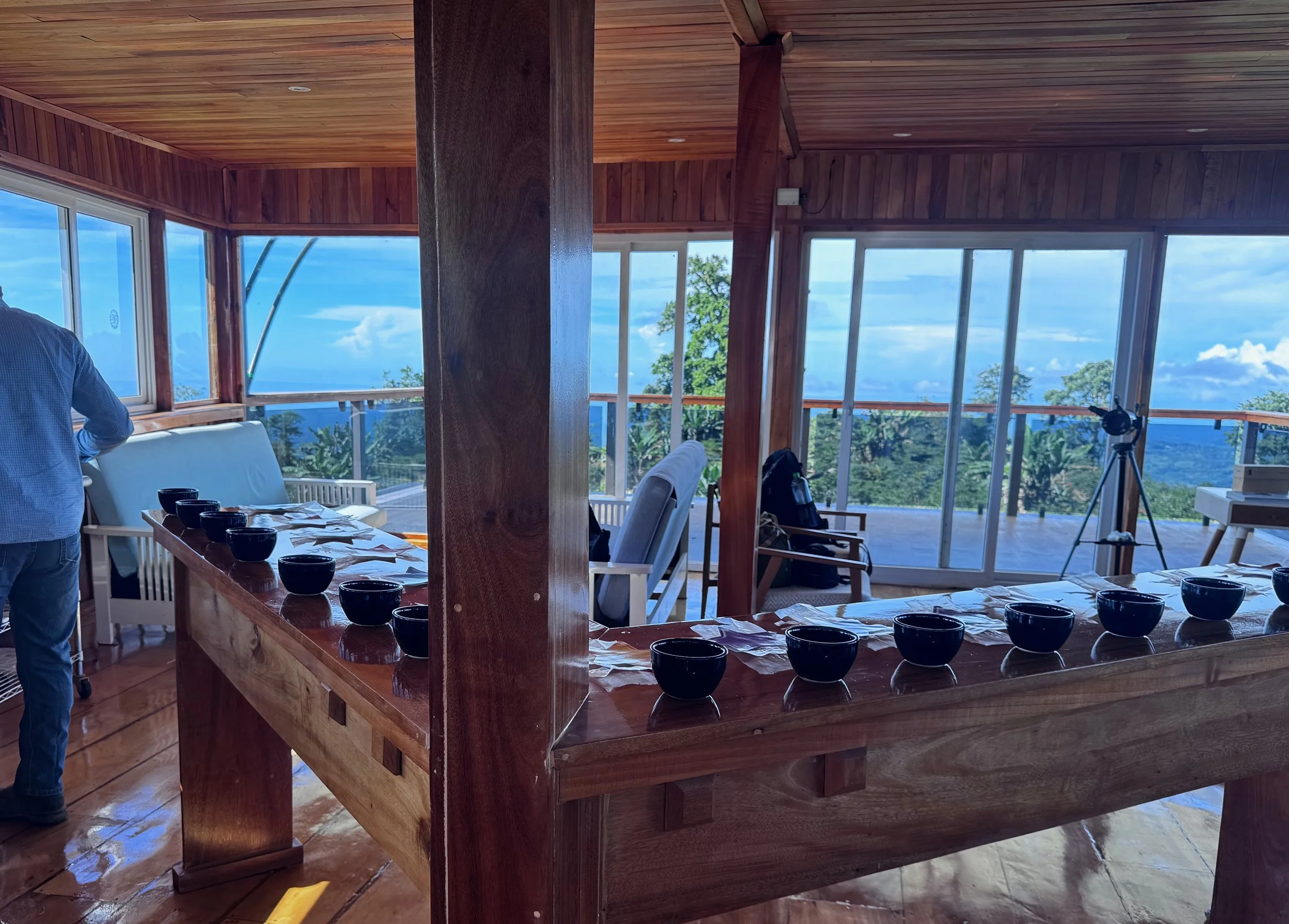
Cupping Room with a View at Mil Cumbres
Finca Chevas
Jose Chevas
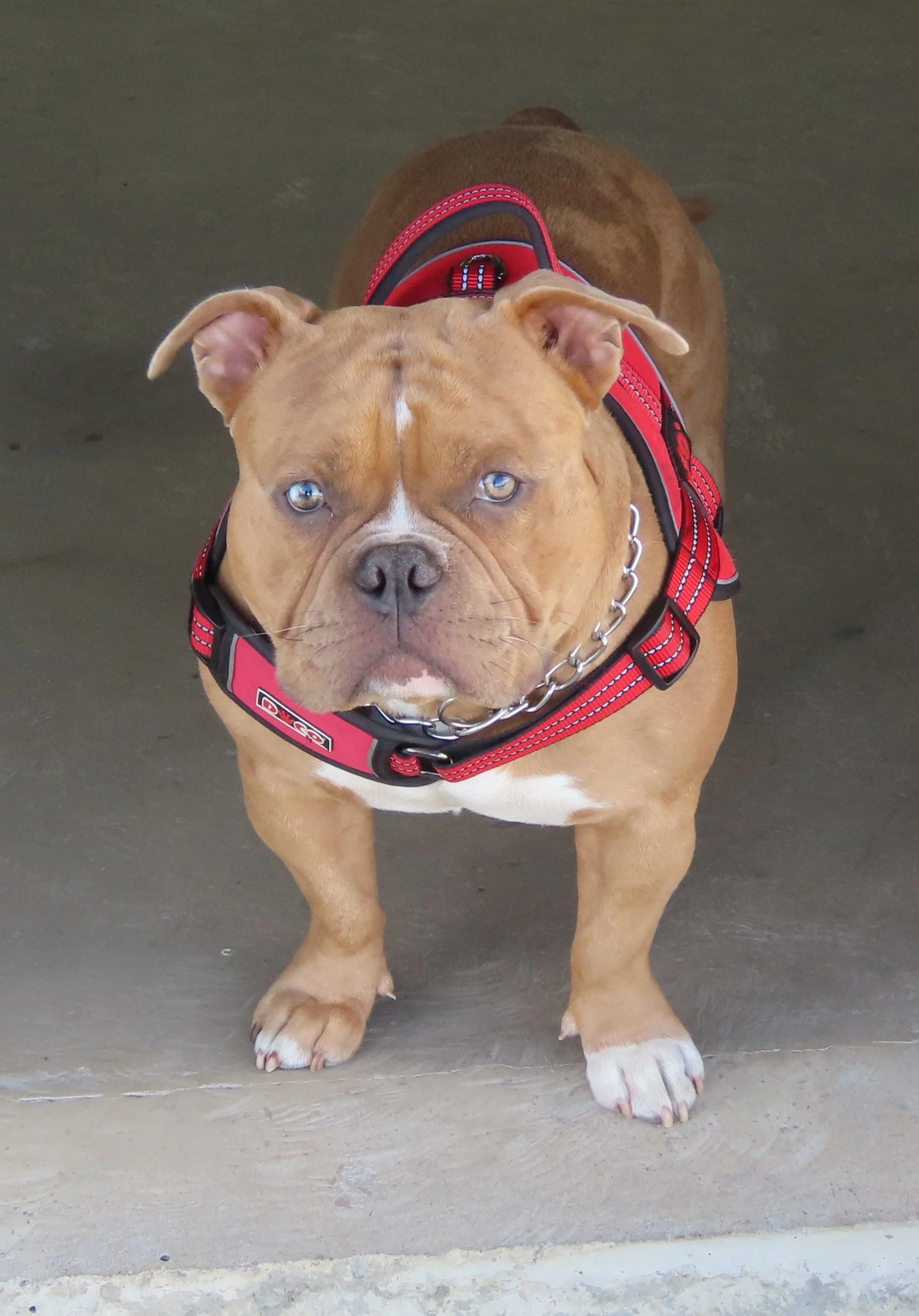
El Jefe of Chevas. Orion.
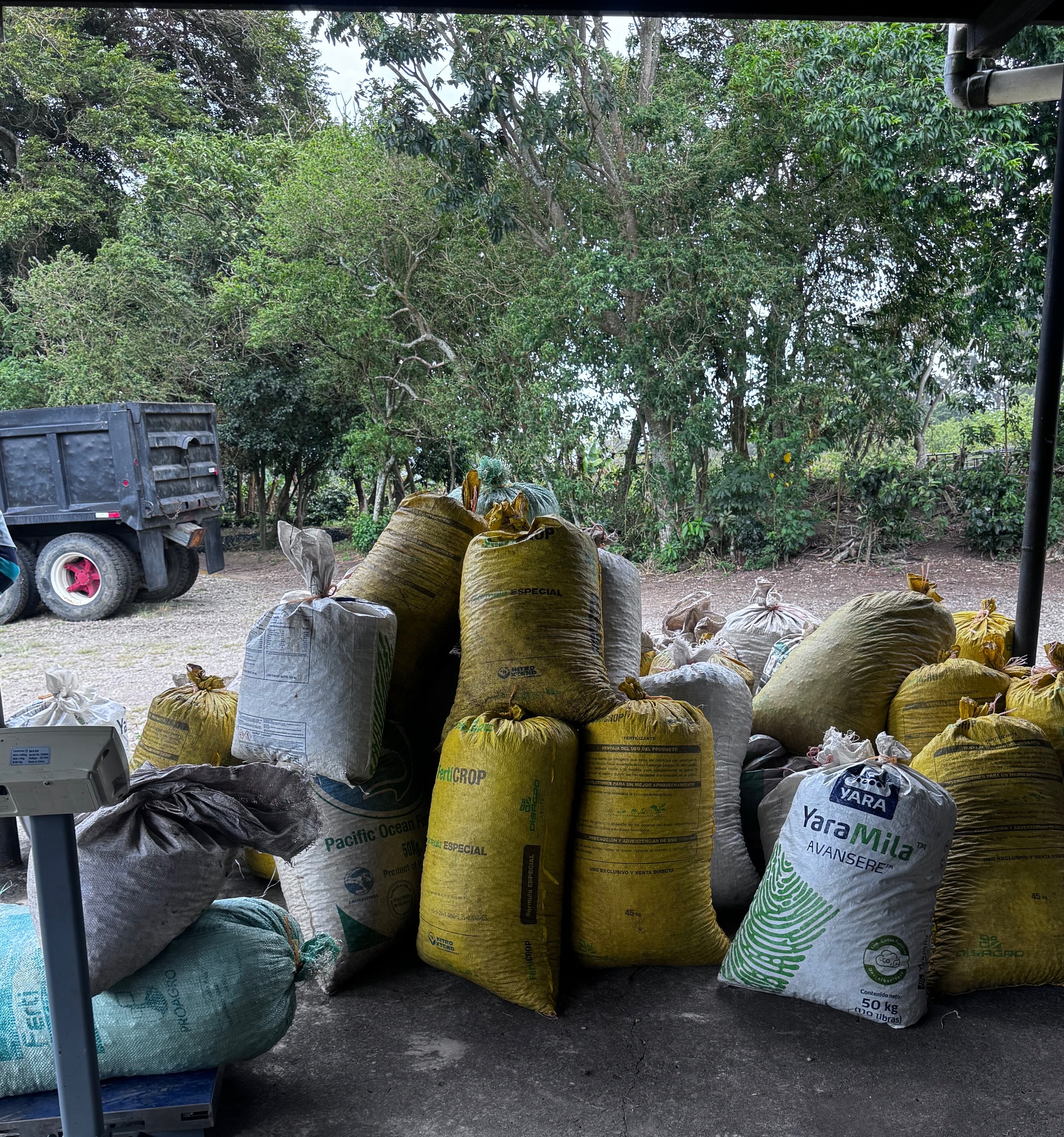
After returning to Boquete, Jose Chevas picked me up and drove me to his family farm in El Salto, Boquete, about 15 minutes Northwest of downtown Boquete. Jose took over the farm from his father in 2017 who, in addition to growing coffee, also grew onions on the property and was one of the biggest onion producers in the country.
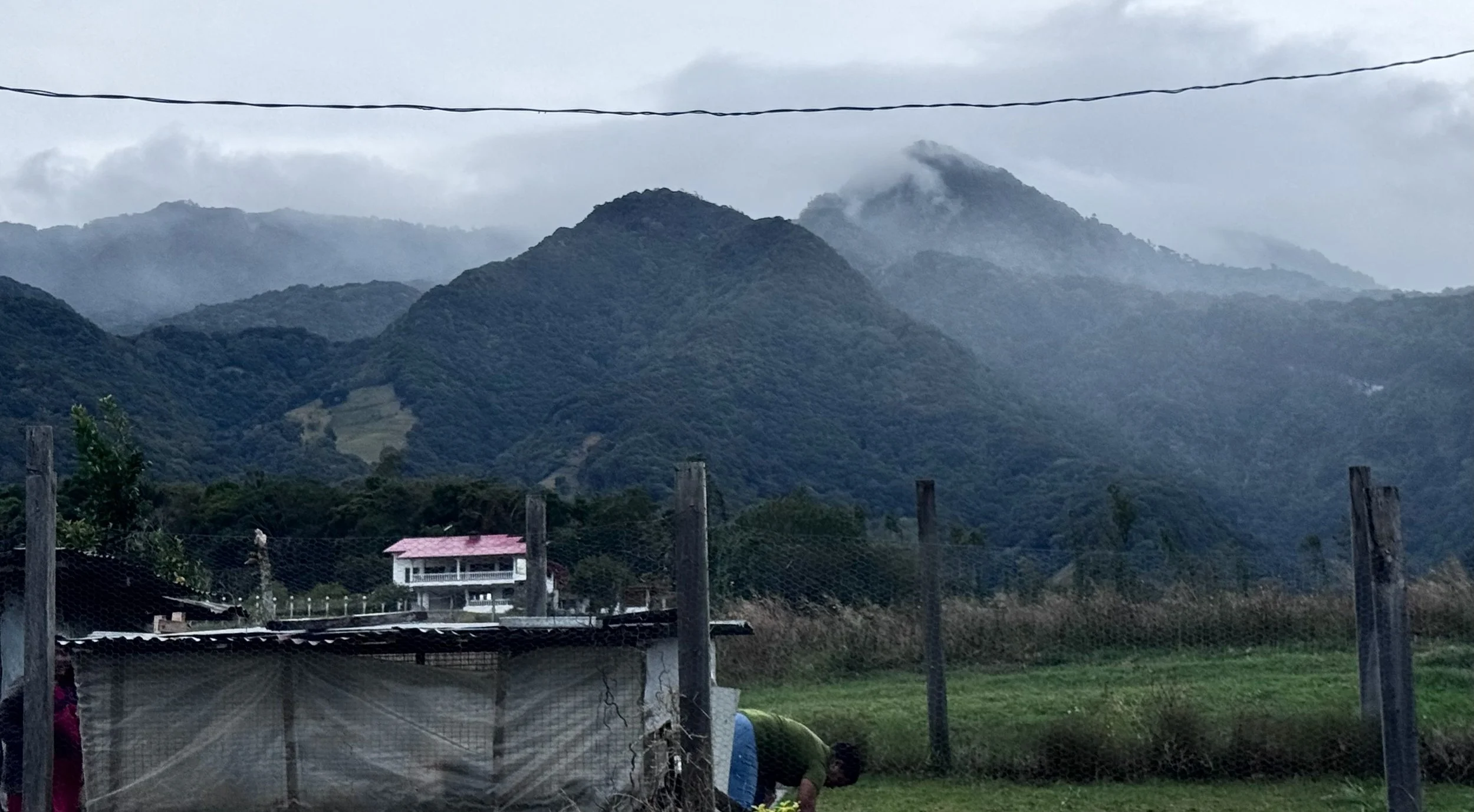
Harvest was winding down but there were still cherries to pick at Finca Chevas.
Since taking over the farm, Jose and his girlfriend Valentina have taken the farm to new levels. Previously, most of the coffee at Chevas stayed in Panama for local consumption, but now Finca Chevas is one of the most revered up-and-coming farms in Boquete with consistently strong showings at the annual Best of Panama competition. They have dedicated a lot of resources to experimentation and infrastructure and it certainly shows in the cup.
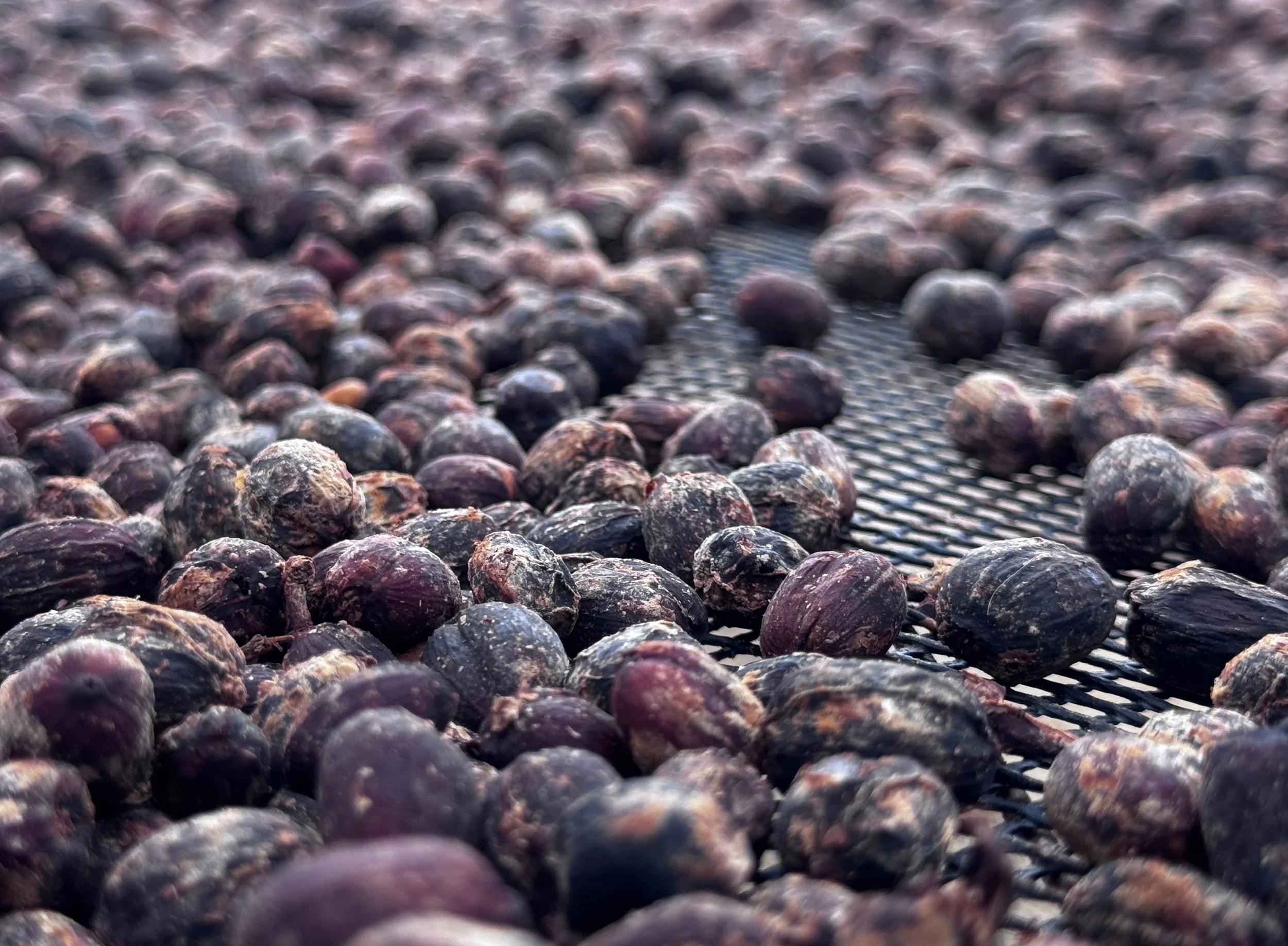
Drying cherries still dusted with beer yeast.
Their dark-room dried coffee is very sweet and nuanced and they add beer yeast during fermentation for many of their lots to great success. I cupped about 30 coffees with them and narrowing things down to just one lot was difficult but I did secure a small lot of natural Geisha that was dark-room dried that will likely be a Summer offering for us so stay tuned. At this writing, the coffee is being prepped for shipping.
The End…For Now
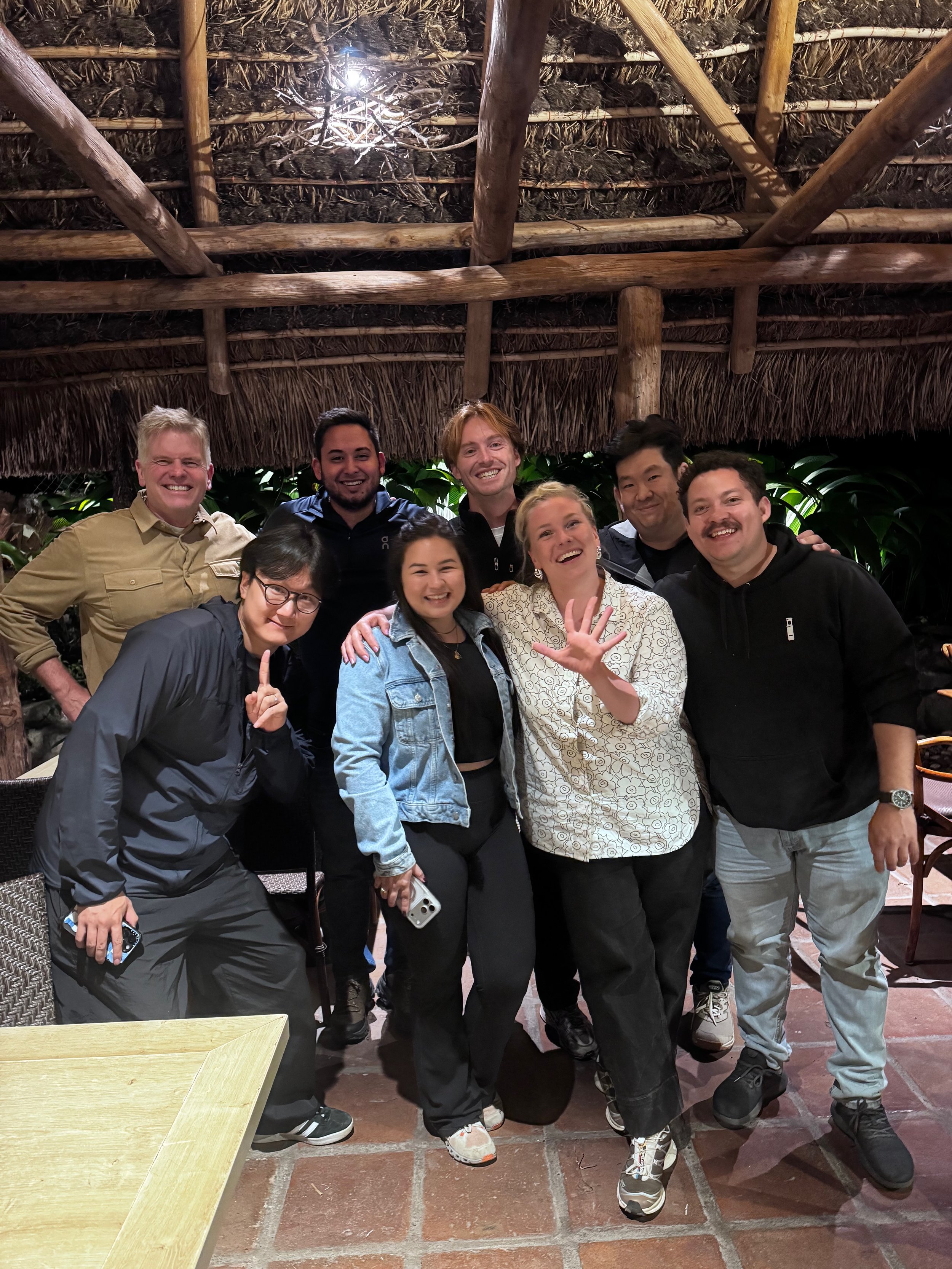
After the cupping, Jose and Valentina invited me to dinner in Boquete for my last dinner before heading home. As fate would have it, a group of other coffee people were at the same restaurant so it turned into a terrific sendoff dinner! It is often said that “Coffee” is about “People” and I believe this to be true. It was lovely to meet some other like-minded coffee people from LA, Korea, Canada, and London that night and we spent the evening sharing tasting notes, travel stories, and excellent food.
Good times were had.
Cheers until next time!
Did all this talk about Geisha make you wish you had some right now? Well, we do have a lovely one from Colombia right now: Finca Mikava Hybrid Process Gesha.