
Ultralight: How light is too light?
I have been around the coffee business long enough to see trends come and go. The once-popular dark roast Starbucks brew is hard to swallow nowadays —in fact, the company would be dead without their 1000 calorie desert drinks which have little to do their founding principles that grew out of the little coffee shop at Pikes Place Market.
I believe the co-ferment trend has peaked, thankfully. And the barrel-aged green coffee thing … well, it has become passé.
While the ultralight trend has been around for a few years it is having a moment so I thought I would share some of my deep thoughts on the topic. As of now, I can’t say for sure if ultralights are bad or good given that my overall exposure to them has been somewhat limited. I have ordered a few coffees from “ultralight”-leaning roasters and had a few at coffee meetups, but I am not sure at this point what all the fuss is about.
Allow me to explain:
While I was prepping for this short opinion-piece I read two excellent blogs on the topic, one on the “Useless Coffee Blog” and the other was on “Pocket Science Coffee”. I didn’t agree with everything on these blogs but I enjoyed reading both and both of those blogs offer a deeper, more science-based approach to the topic than I will offer here and I think both are worth a read of you are interested in this style of roasting.
What follows here are merely musings on a topic in general. This isn’t really an opinion piece so much as it is an exploration, given that ultralights are not my thing— at this time— though light-roasted coffee certainly is my thing.
According to numerous coffee bloggers, roasters, and enthusiasts ultralight roasts are the best way to truly appreciate what a coffee has to offer as ultralights present the cleanest, most transparent version of a particular coffee.
Defining exactly what an ultralight is seems to be a moving target. Depending on who you trust in the bloggy-sphere the concept and definition of what an ultralight is, changes. As far as I can tell, “ultralight” is interchangeable with “Nordic Roast,” a light roasting style that was promoted by Tim Wendelboe years ago. In general, an Ultralight Roast/Nordic Roast is the lightest of the light roasts with very little bean caramelization.
For years, coffee professionals used the terms City, Full City, Italian, French from lightest to darkest to describe roast degree. When we are talking about “roast degree” and a particular “doneness” of a coffee we are generally talking about its appearance — color.
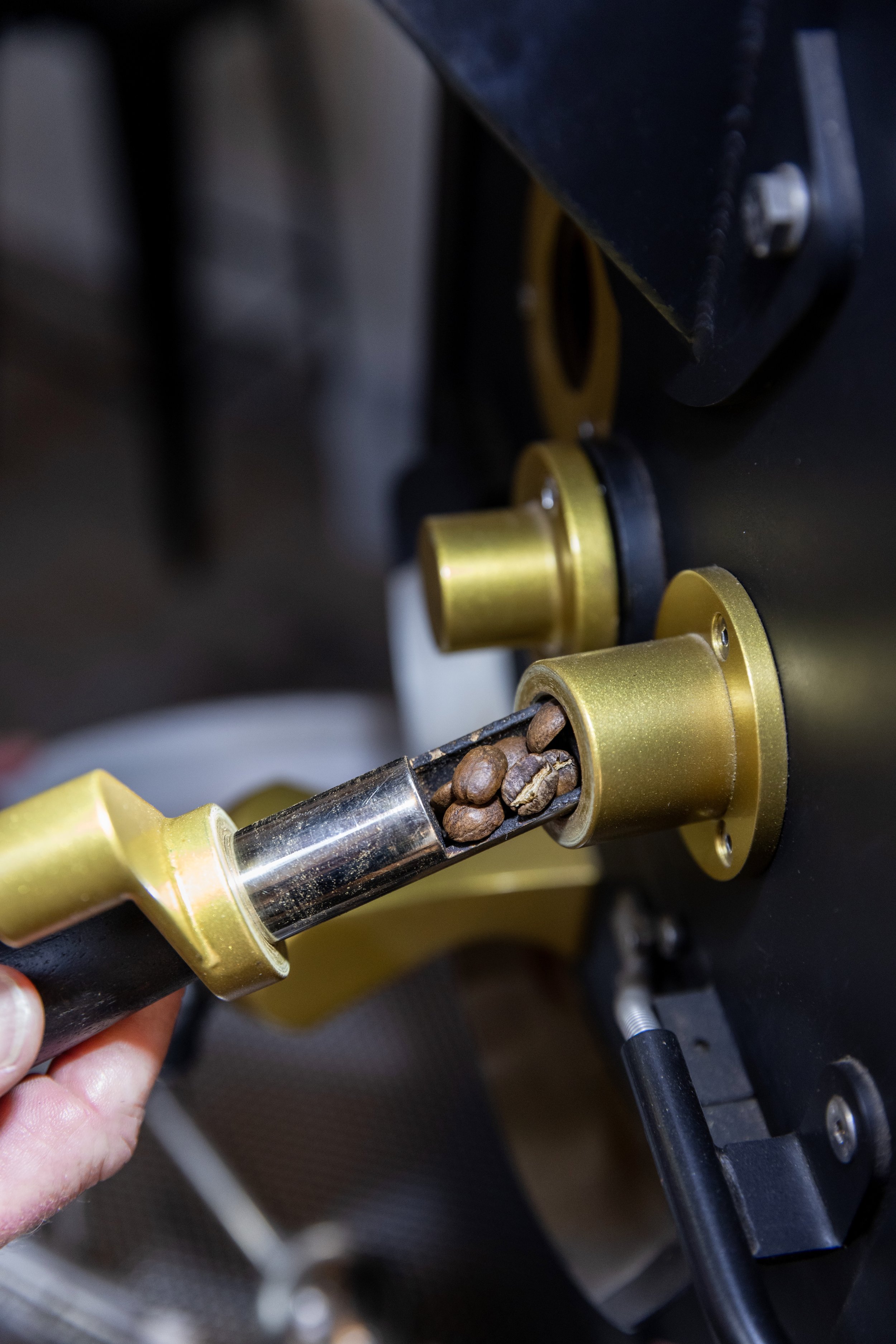
During the roasting process a coffee bean passes through numerous chemical changes in order to reach a point when one can brew it up as a cup of coffee or extract it as espresso. Regardless of final roast degree, a coffee isn’t drinkable/brew-able until it reaches the point of First Crack in the roaster, when moisture within the bean boils and causes the bean to audibly pop — like popcorn. How long a coffee remains in the coffee roaster after the First Crack starts (development phase) will determine the roast degree; the longer it stays in the roaster, the darker the coffee will get.
If I am using a traditional drum roaster and roasting to City level, about 75% of the first crack will happen inside the roaster and the crack will actually finish once I dump the coffee onto the cooling tray thanks to carryover. Usually, this cracking will last for about a minute or 1:15 in the roaster prior to dropping for a typical 9-10 minute roast. During a “Full City” roast almost all of the crack will finish in the drum, while with a French roast, the first crack finishes in the drum and the coffees continues to roast until the second crack starts — and maybe even finishes—making for a rather long and very dark roast.
With an Ultralight Roast, a much smaller percentage of the first crack will happen within the drum prior to dropping the coffee on the cooling tray — or the start of the cooling cycle. More on this later, but with my initial research into “ultralight roasting profiles” I found that many roasters ended the development phase after about 30 seconds from when the coffee first started to crack.
This does not necessarily mean a nordic or ultralight roast will be significantly quicker roast over all. If the roast is done too quickly, you will be left with many un-roasted beans, beans that have not even entered the first crack — when the coffee is finally cool.
( I would argue this is exactly what happens when some roasters attempt the “ultralight” profile.)
Where “underdeveloped” beans fall on one’s enjoyment spectrum can be somewhat subjective but what has been standard in the roasting industry and coffee-judging practice since long before the inception of the SCA, is that underdeveloped coffee is a roasting defect. Now, you may like the taste of underdeveloped coffee but it does not change the fact that the underdeveloped coffee bean has not reached certain benchmarks during the roasting process that coffee scientist, coffee historians, coffee professionals would point to as the point when coffee is “done.”
Yes, I have absolutely had coffee that was called an “ultralight” what was very much underdeveloped, sour, and undrinkable.
That all said, I believe there are ways to roast a coffee to the ultralight level while also reaching a certain point of drinkability/acceptable development. Perhaps this roasting style is better suited for a fluid air roaster like a Stronghold or maybe something far more advanced like a Reost which allows a roaster more flexibility and control on a very precise level than is attainable on a traditional drum roaster as this approach to roasting is very delicate.
But, I was curious to give it a shot so I did try to roast coffee using an “ultralight” profile on my Geisen drum roaster. Disclaimer: ingredients matter and I used a coffee I am not offering for retail but one that I am using coffee roasting training purposes — maybe not the best source to use for an ultralight attempt.
Instead of my usual 1-1:15 minute of development time I dropped the coffee at 30 seconds of development time. The roast was quick — probably too quick. I did not age the coffee for very long, nor did I attempt to find the optimal brewing recipe for it prior to trying it. I just did a basic pour-over with the coffee and cupped the coffee with during my usual QC cupping.
I found my ultralight attempt to be, well, undrinkable —hay, bread, grassy…nothing there for me but it was very clean. The minimal development time of coffee also offered up clarity that is sometimes not perceived in a City or City+ coffee.
Overall, my attempt at an ultralight failed for a variety of reasons but I can kinda see why someone would want to explore the style more deeply.
Regardless of where you stand on the ultralight topic, we can probably all agree than ultralights are not for beginners when it comes to drinking the coffee — or roasting it for that matter.
Let’s say you found an experienced roaster who specializes in this roasting style and can really pull it off well. Great. Now what?
You can’t treat the ultralight coffee as you would a coffee that is roasted for traditional filter brewing. For one thing aging the ultralight coffee, especially one that was roasted on a fluid air roaster, becomes a vitally important step towards actually enjoying the coffee.
The lighter the coffee, the more it will benefit from aging as the the chemical changes that normally happen to a coffee after roasting occur more slowly in a lightly roasted coffee given that the light roasted bean is not as porous as a darker roasted bean.
Based on my own experience with the Giesen drum roaster, the most lightly roasted Giesen coffee will be good to drink after a few days to a week or so from the roast date. In fact, the coffee roasted on my Giesen often seems to peek in flavor after couple weeks. (There are exceptions to this rule. The aging time is impacted by the roast style but also how the coffee was processed at origin and the varietal of the coffee bean used. I have gotten excellent results with a natural/hybrid processing styles and much longer aging, for example.)

A fluid air roaster, on the other hand, may need a few weeks of rest from the roast date to peak in flavor and complexity so with an ultralight roast that was roasted on a fluid air roaster, it seems that a month or more of aging is actually necessary in order to appreciate what the roaster is trying to accomplish.
Brewing an ultralight also takes more time and care than a City roast. The ratio and pour over method that works for a coffee roasted to City, simply won’t work on an ultralight. Furthermore, many of the people who enjoy ultralights also use mineral additives with the water they use for brewing. Water quality has a massive impact on coffee quality and if you are using water additives that specifically highlight the attributes of an ultralight coffee, high-toned fruit, vibrant acidity, the coffee will have a better opportunity to shine.
So Do Ultralights Suck?
Well, no they do not, according to the roasters who sell them and the numerous ultralight fans out there seeking them out.
Ultralights are not universally good and a roaster should not embrace the style simply because he/she is trying to stay relevant. Like any other roast style, success will come down to the skill of the roaster and the quality of the green coffee. Not all coffee does well with an ultralight roast and thinking that every green coffee they source will work as a very light roast is a mistake I see a lot of newer roasting companies make.
One of the reasons I roast and enjoy more of a traditional Light Roast coffee (City) is because it is more approachable when it comes to aging and brewing and I think the City roast degree — WITH THE SPECIFIC COFFEES THAT I SOURCE — produces a much better, more complete coffee-drinking experience than what is achieved through ultralights. Sure, we do have some guidelines/suggestions on this website for brewing our coffee but that doesn’t mean the coffee we sell will ONLY shine using that brew recipe; the coffee will also shine with a more relaxed approach to water quality, and certainly, one can enjoy it days after the roast date, not months.
I don’t think ultralights offer much when it comes to flexibility of brewing parameters and that could be OK with one’s target market but not Ok if a coffee business is trying to cast a slightly larger net.
I did get a fair amount of exposure to ultralights recently at the last SD Coffee Club meetup that took place in August 2026 at Coffee Cycle in OB were many ultralights were cupped and brewed via a variety of brewing methods by passionate and experienced coffee enthusiasts and professionals.
Some of the ultralights I tasted were good but I suspect a few of the roasters who had contributed coffee had an idea in mind that “ultralights are my thing” and roasted a particular coffee to an ultralight degree without the proper roasting profile explorations — in other words, without testing to see if the coffee might be better with more development. As a result, they created a coffee that was vibrant but without character, not even varietal character that ultralights are supposed to highlight.
Which got me thinking: are ultralights more of an exercise in taste, rather than an exercise in enjoyment? Am I supposed to experience flavors and not necessarily enjoy the experience?
While I believe coffee should be accessible that doesn’t mean all coffee that isn’t immediately accessible is bad. Again, this comes down to personal preference. We should accept that people like different things and that not all roasters are catering to the same group of coffee enthusiasts.
The other PRO I see to ultralights is that niche coffee trends breed discussion, discussion breeds experimentation and experimentation is the very foundation of the specialty coffee industry. Maybe I am suspicious of ultralights as a whole but I love the energy and passion behind trends like this because they forward the never-ending discussion within industry trying to answer the question: “What is good coffee?”
This sort of debate is exactly what makes specialty coffee interesting and exciting and pushes the industry to evolve.
Overall, I think ultralights and the discussion around the roasting style is good for coffee but there is one other little thorn I am having trouble with about the roasting style and this is due primarily to my aged position now within the coffee industry.
Believe it or not, I actually look forward to the time when I am blown away by an ultralight and it causes me to re-think my approach to coffee — if indeed that happens…
Certainly we all have our preference when it comes to roast degree and individual taste preference is part of the fun of a coffee journey, but I think a CON to ultralights is that if the roaster is selling a coffee that ONLY tastes good at exactly 163 days of rest and ONLY brewed with a specific method/ratio while ONLY using a very specific water with specific water chemistry, I’m not so sure the roaster is acting as a good custodian of that coffee-grower’s coffee.
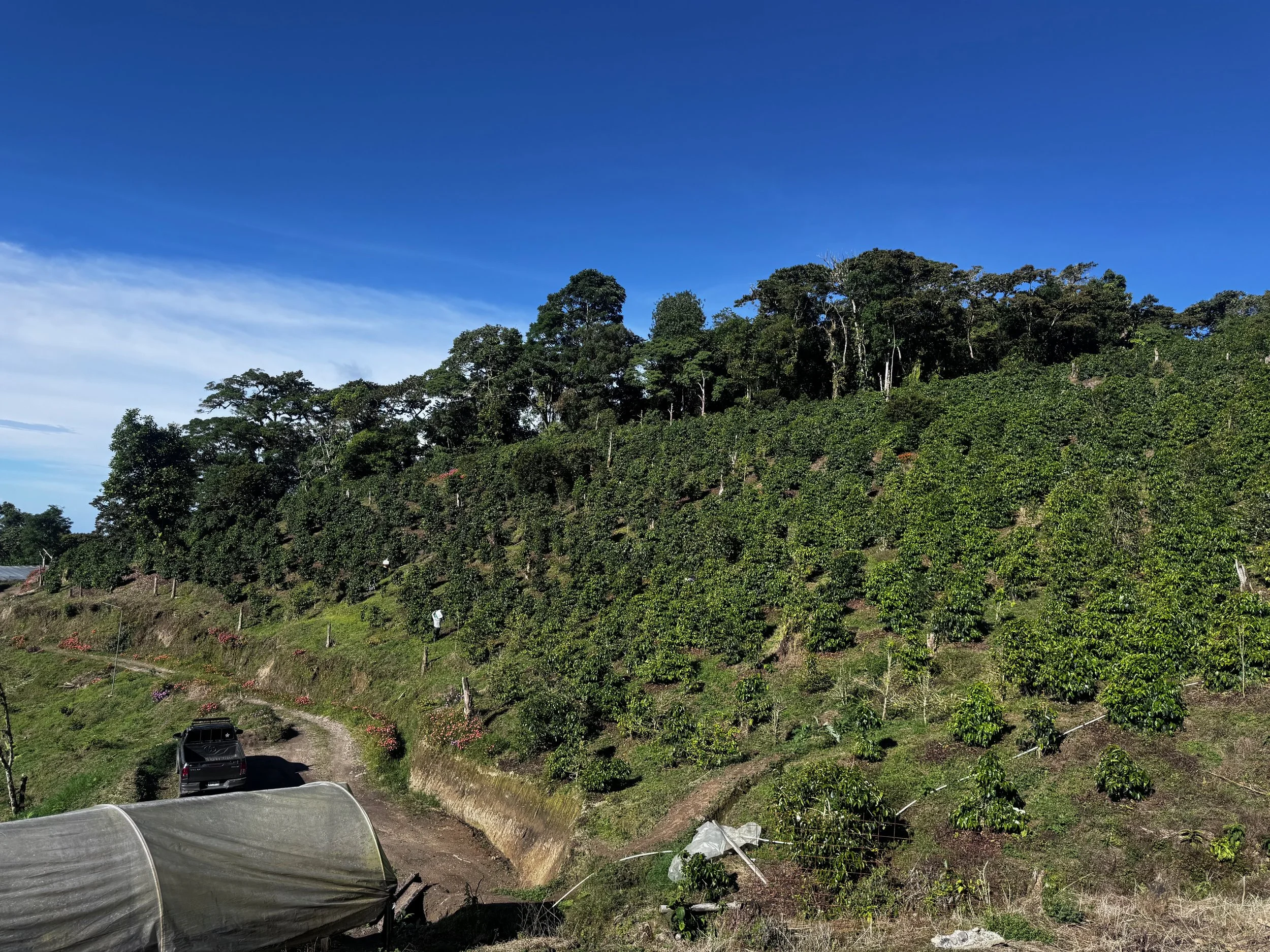
This particular part of my opinion is coming from someone who has spent a considerable amount of time on the ground in over fifteen different coffee-growing countries, working directly with numerous growers on countless coffee farms. I tend to view coffee from the place of origin at times and I often find myself thinking: how would this grower want me to present his/her coffee to the world?
Roasters who are ultra-lighting are buying the best of the best, the very pinnacle of green coffee quality — you cannot hide bad coffee with a light roast.
That coffee in the roaster’s warehouse did not just happen accidentally; it was not just a one-season success story for the grower. The coffee that the roasters have in their warehouse right now took years, perhaps generations to perfect. That coffee represents an incredible level of commitment. It represents success, sure, but also a lot of failure and a lot of hardship. It represents a great deal of pride for those who grew it and an affirmation that all the hard work, pain and suffering was worth it.
And, yet, the ultralight roasts present that coffee with only a narrow, very specific, window of success for people to enjoy it — which is fine IF IF IF indeed that is the best expression of that coffee after numerous roast profile attempts, trail and error, cuppings etc.
I just can’t help but think that in the pursuit of The Ultralight, we are missing the point of what it means to be a steward of special coffee.